

- Date of Incident
- 01 Jan 2014 – 01 Jan 2017
- Location
- Cordillera del Condór, Ecuadorian Amazon
- Publication Date
- 07 May 2020
- Commissioned By
- CASCOMI (Comunidad Amazónica de Acción Social Cordillera del Cóndor Mirador)
- Additional Funding
- Ford Foundation, Autonoma, European Research Council (ERC)
- Collaborators
- MediaLab UFRJ, CASCOMI (Comunidad Amazónica de Acción Social Cordillera del Cóndor Mirador)
- Methodologies
- Fieldwork, Geolocation, Remote Sensing
- Forums
- Web Platform
- Exhibitions
- Atmósferas de Terror
The implementation of mega-mining projects in the Ecuadorian Amazon has been marked by systematic human rights violations of indigenous and peasant communities that live in these territories and oppose such projects. A series of strategies of deception, coercion and violence, including brutal evictions, are forcing communities to leave their lands where mining blocks have been allocated.
Together with massive enclosures and displacements, mega-mining operations bring about the destruction of indigenous archaeological sites and large-scale environmental damage. This report and platform investigates the relationship between these processes – community evictions, ecological impacts, and archaeological destruction – in the context of the mega-mining project Mirador in the Cordillera del Cóndor, southern Ecuadorian Amazon.
Inhabited by Shuar, Andean kichwa and Mestizo communities, this territory is home to unique biodiversity and millenary indigenous cultures. In order to open land for the mega-mine, the entire community that lived in the area was coerced to leave or forcibly evicted. This report maps this process of dispossession, as well as the destruction of archaeological sites and the environmental impacts caused by the construction of the mega-mine complex, providing evidences of systematic human rights violations committed by the Ecuadorian State and the mining company Ecuacorriente.
Dispossession of History
In this testimony with Carlo Tendetza from the Shuar community of Yanua Kim, he expresses his concern that mining companies are increasingly harming the local community. He discusses the destructive effect of the mining project on archaeological heritage in tandem with the environmental destruction that has caused a notable decrease in the biodiversity of local fish species.
The Violence of Displacements
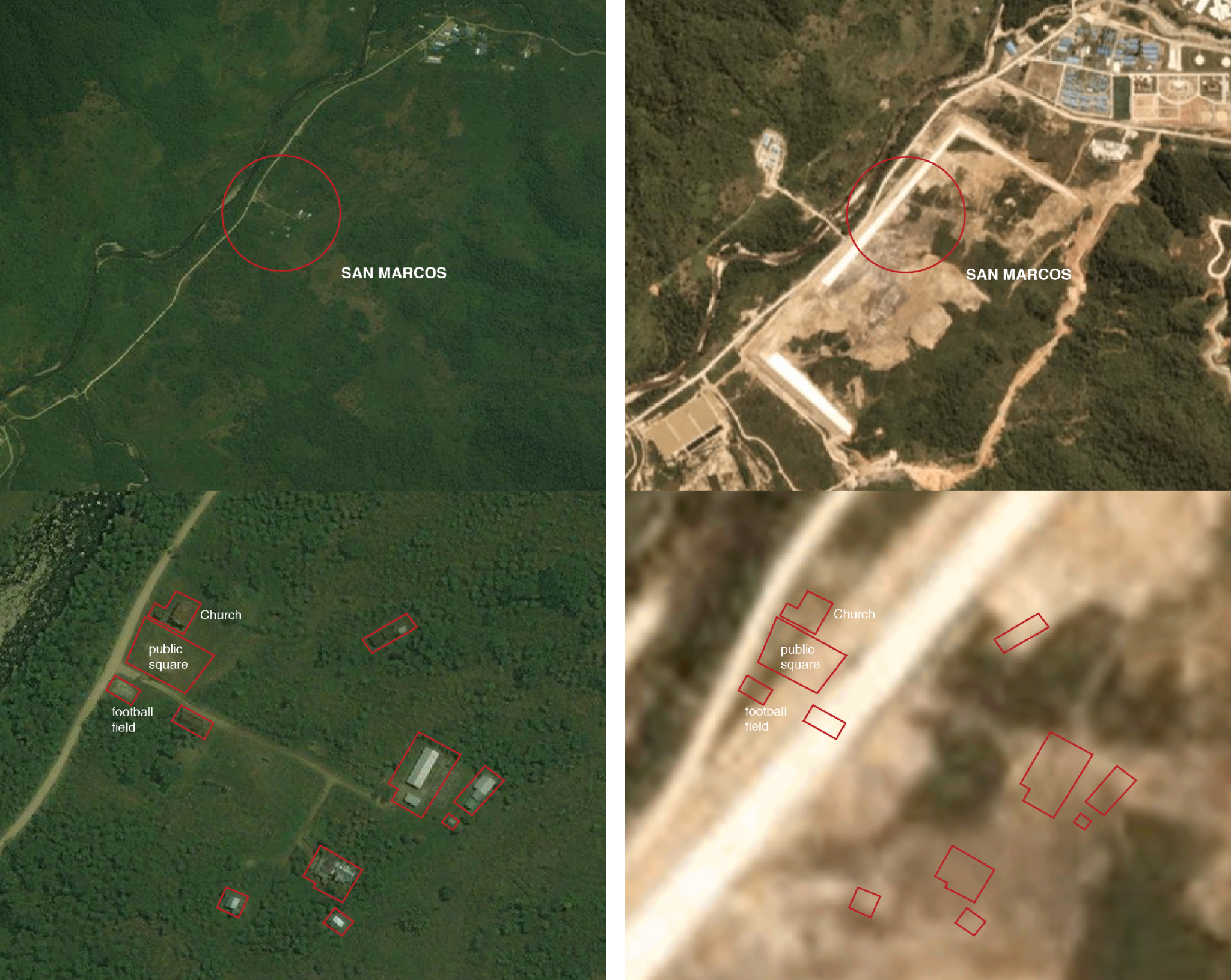
The platform charts the social impact of violent evictions and the resultant resistance by indigenous residents, the environmental changes that took place as a result of deforestation, industrial scale mining operations, and its toxic waste products, as well as the cultural erasure resulting from the destruction of archaeological sites.
Methodology
The methodology used in this report includes investigation of archives, government documents and reports produced or commissioned by mining companies. It also includes a set of studies of satellite images that provides original information on the case. Mappings were based on interviews with victims as well as several field visits in the affected area. The evictions were mapped through a collaborative process with members of the local organisation CASCOMI – Comunidad Amazónica de Acción Social Cordillera del Cóndor Mirador, which represents the families affected.