

- Date of Incident
- 09 Jan 2009
- Location
- Beit Lahiya, Gaza, Occupied Palestinian Territories
- Publication Date
- 11 Mar 2014
- Commissioned By
- UN Special Rapporteur on Counter Terrorism and Human Rights
- Additional Funding
- None
- Collaborators
- SITU Research, Al Mezan Center for Human Rights, Reprieve, Al Jazeera English
- Methodologies
- 3D Modelling, Image Complex
- Forums
- Report of the UN Special Rapporteur for Counter-Terrorism to the UN General Assembly
- Exhibitions
- Forensis
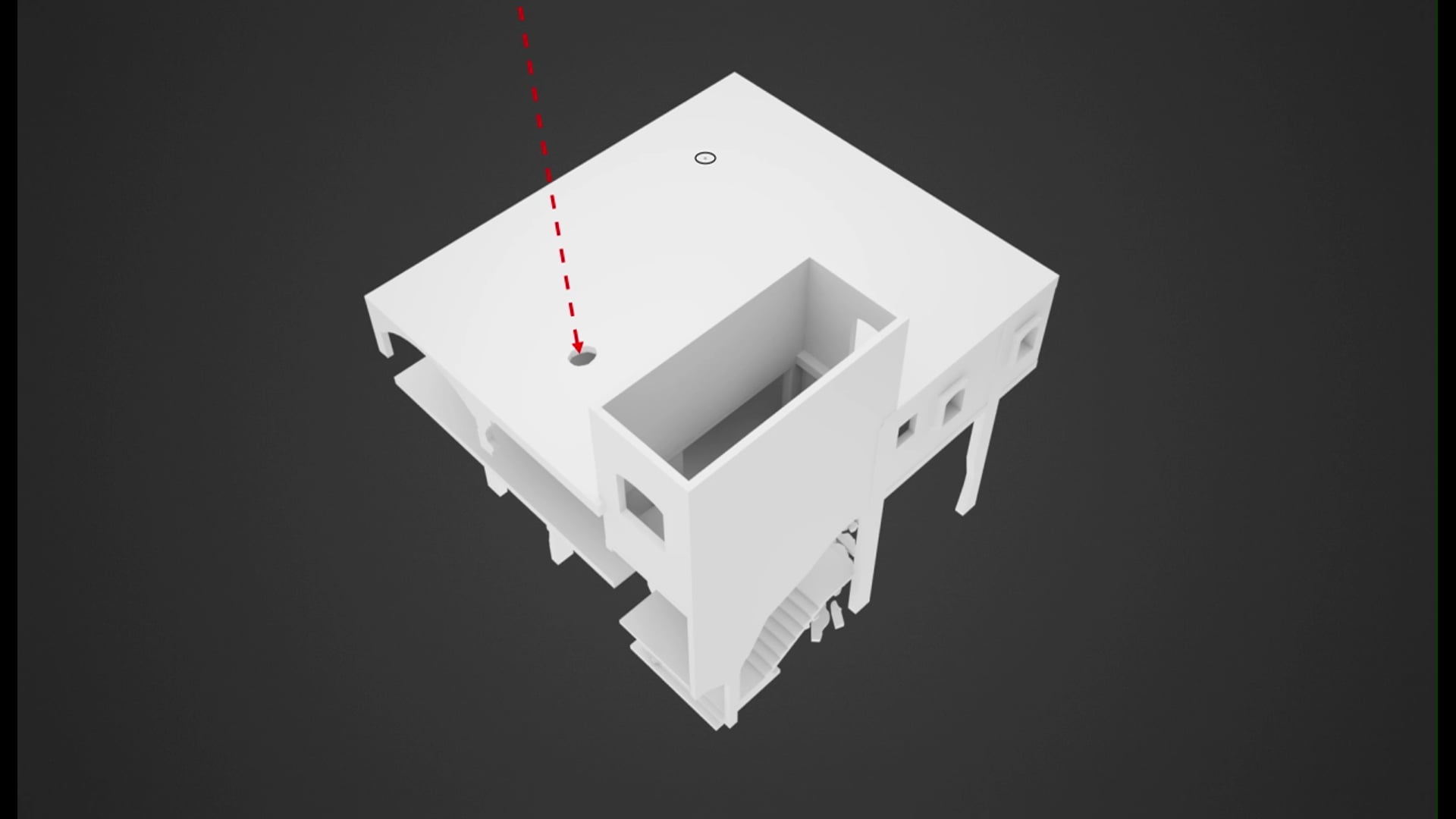
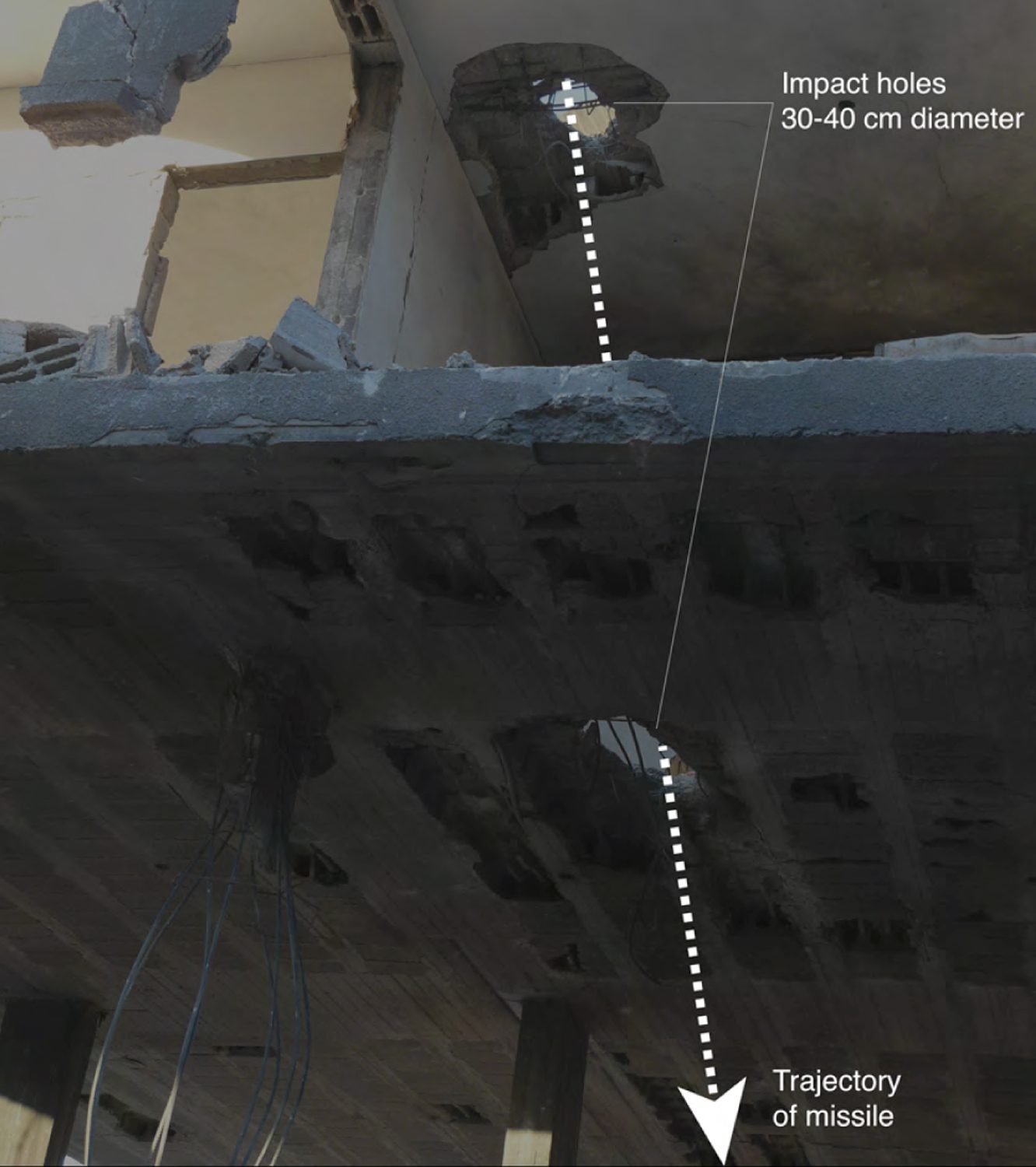
In the early hours of 9 January 2009, a missile struck the Salha family’s home in Beit Lahiya, Gaza. It penetrated both Noor Salha and his family thought they were under attack. Noor’s mother, Randa Salha, called her husband, Fayez Salha. Fayez was at work, on duty as the guard of a UN school. He told them to get out of the building.
The family had no way to know that from the moment of first impact, they had just three minutes before the house would be destroyed.
The strike was what is known as a ‘knock on the roof’: a small, purportedly ‘non-lethal’ missile, which communicates that a larger aerial bombardment is imminent.
‘Warning strikes’ are one of several methods—including telephone calls, text messages, and leaflets—used by the Israeli military to alert civilians to an impending attack.
The warning strike policy was devised by Israeli military lawyers, and is an example of an alarming practice: the use of international humanitarian law (also known as the ‘laws of war’) as a strategic instrument.
Once a warning is delivered, the policy argues, civilians have a choice: evacuate, or leave. In this way, warning strikes legitimise the bombing of residential neighbourhoods by shifting the responsibility for civilian deaths onto the civilians themselves.
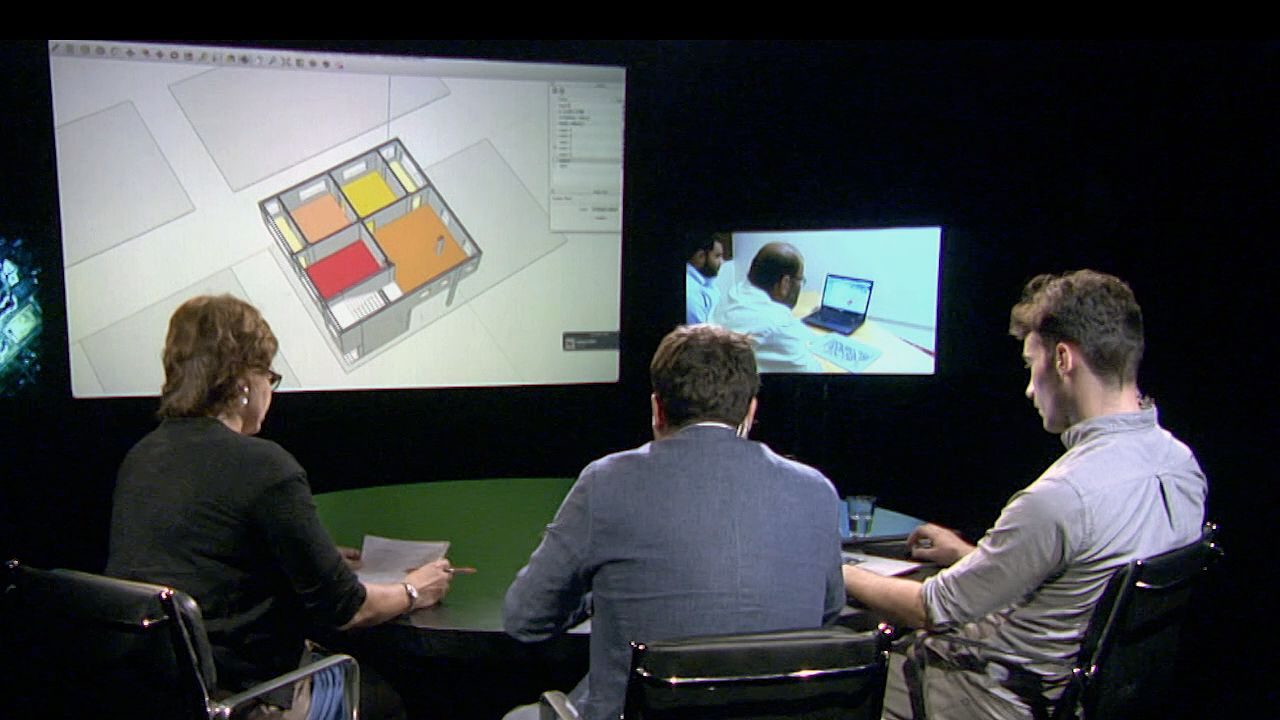
Forensic Architecture (FA) investigated the phenomenon of warning strikes in partnership with the Palestinian NGO Al Mezan, as part of a report on drone warfare by the U.N. Special Rapporteur on Human Rights and Counter-Terrorism (UNSCRT).
In August 2013, we interviewed two of the surviving members of the Salha family, Fayez and his son Noor, by live satellite link from the London studios of news network Al Jazeera.
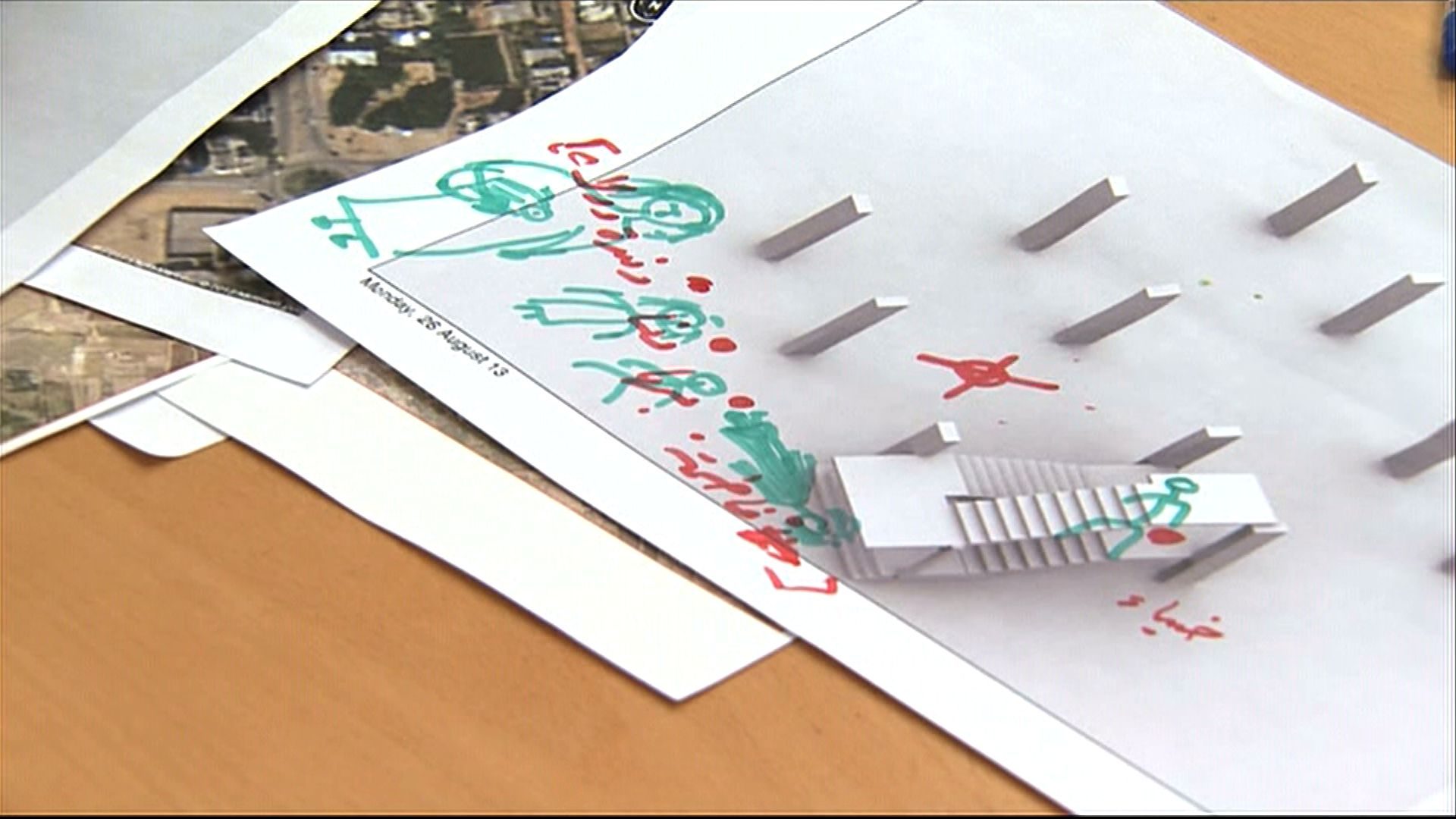
Under the direction of Fayez and Noor, we constructed a digital model of their home, helping father and son to reconstruct the events of the night.
NB: There is an error in the voiceover of the investigation video (above). This incident occurred on 9 January 2009, not in 2011 as is mistakenly identified in the video at 03:05.