

- Date of Incident
- 27 Dec 2008 – 18 Jan 2009
- Location
- Gaza, Occupied Palestinian Territories
- Publication Date
- 12 Nov 2012
- Commissioned By
- Yesh Gvul, Michael Sfard Law Office
- Additional Funding
- None
- Collaborators
- SITU Research, Yesh Gvul
- Methodologies
- 3D Modelling, Image Complex
- Forums
- The UN Human Rights Council and the High Court of Justice in Israel
- Exhibitions
- The Urban-Data Complex at Bi-City Biennale of Urbanism/Architecture 2015, Cloud Studies at UTS Gallery, Antibodies, Cloud Studies at the Whitworth, Cloud Studies at Tensta Konsthall
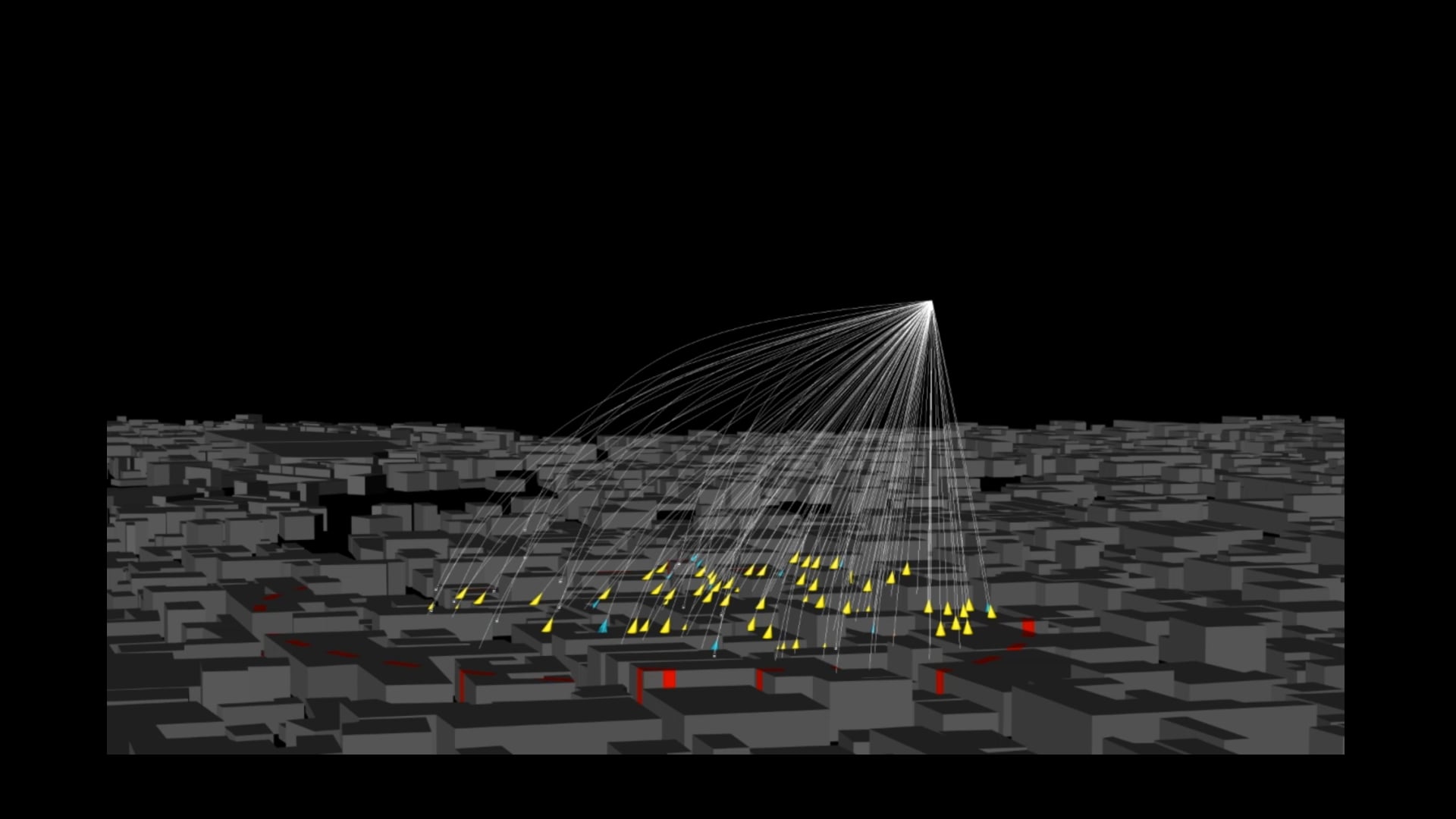
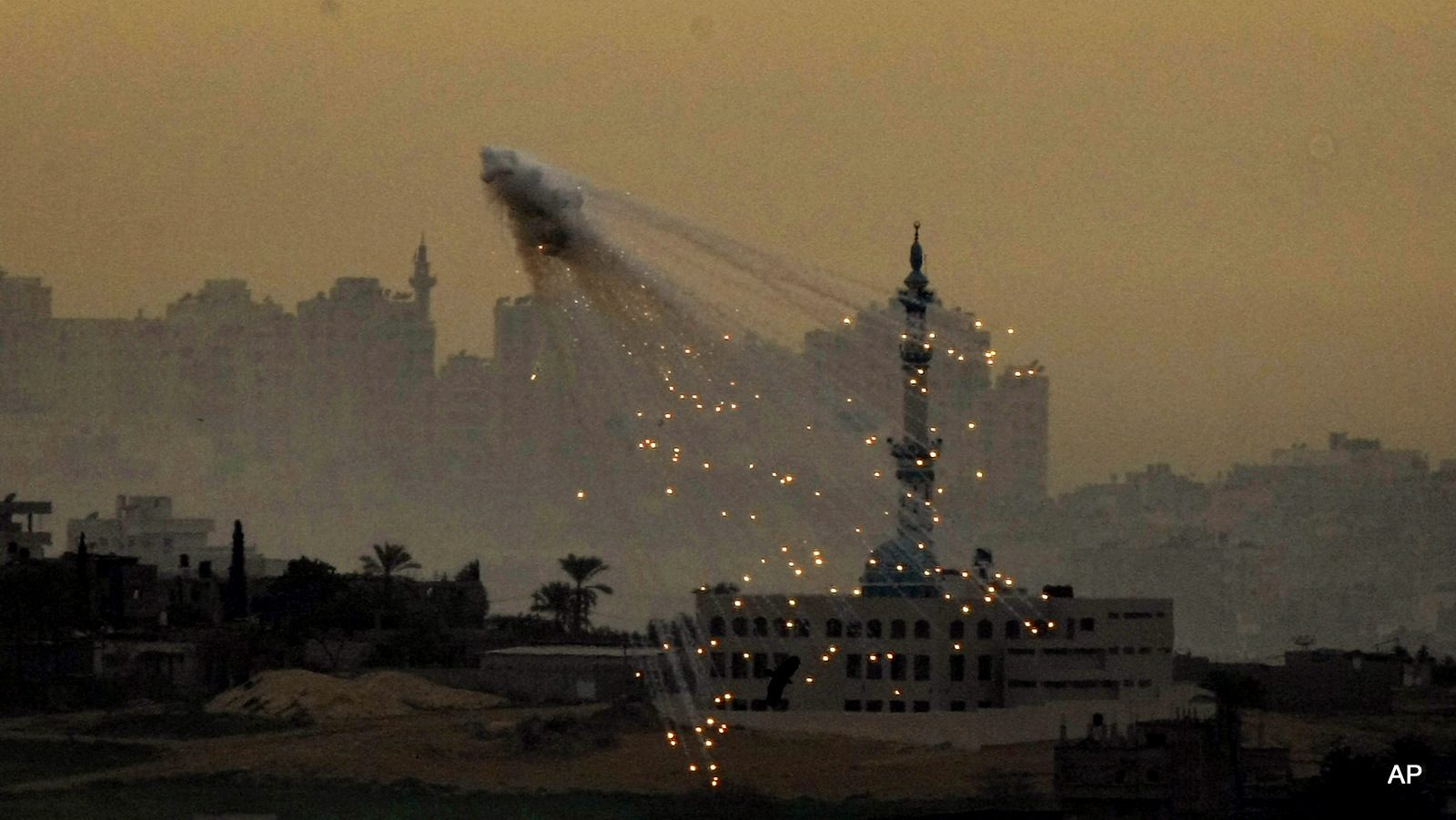
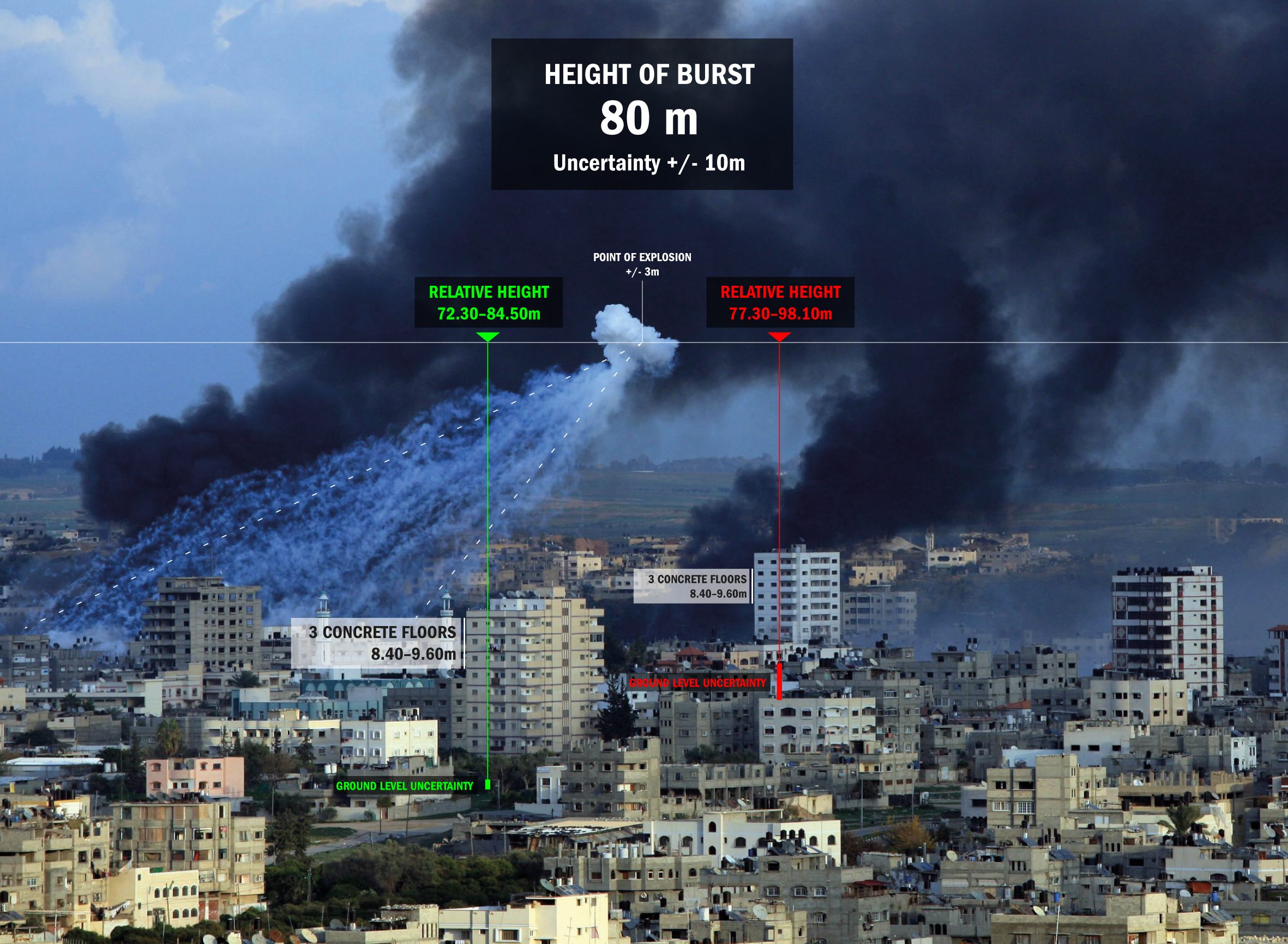
During the 2008–2009 Gaza conflict, known in Israel as Operation Cast Lead, video footage captured a hitherto little-known type of airborne munition: low, luminous clouds, arriving with a thunderclap, often less than one hundred metres above the roofline. ‘Tentacles’ of cloud, arcing slowly toward the ground in a loose cone shape, burning through any surface they encounter as they descend, often igniting secondary fires.
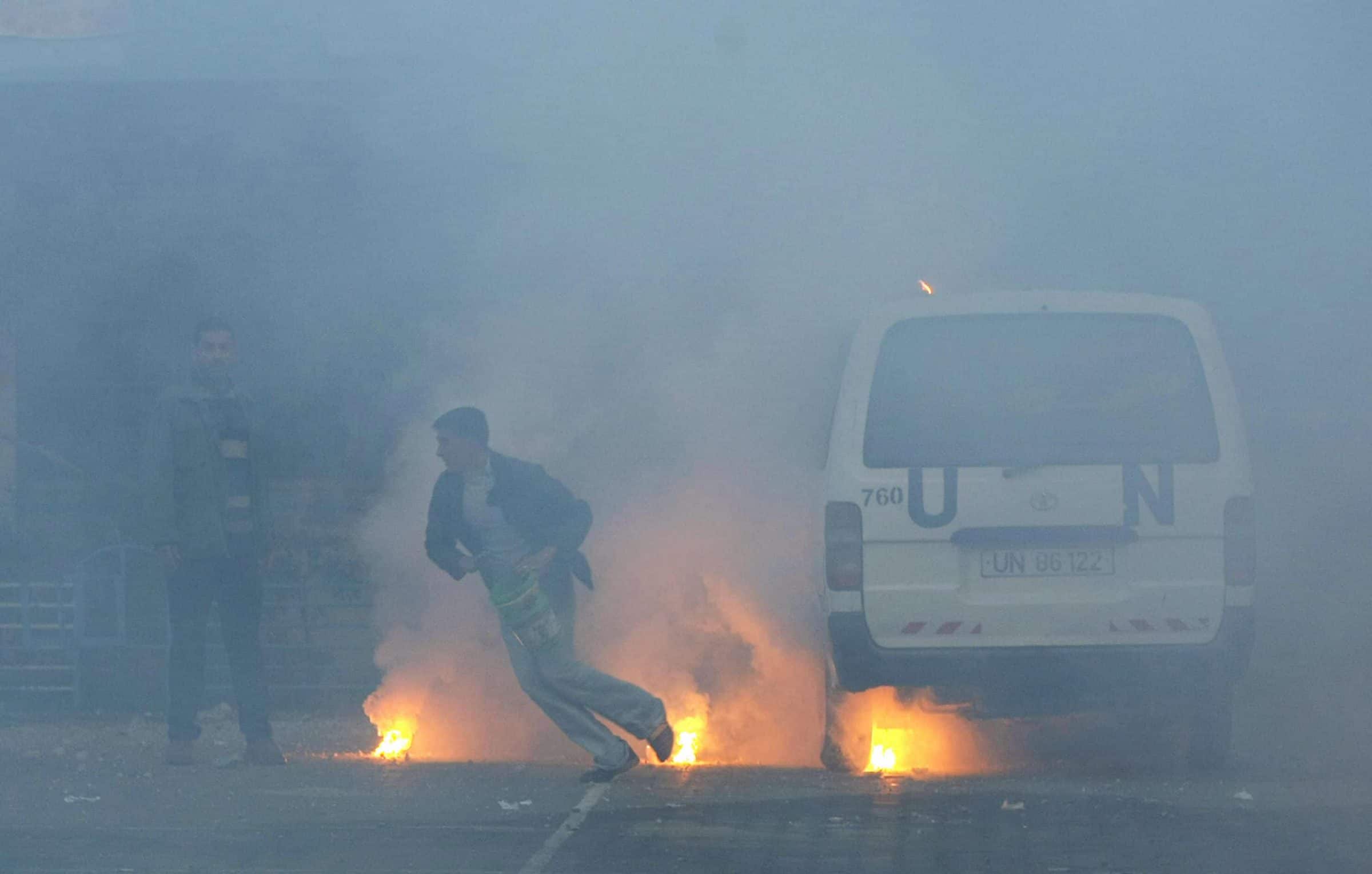
The clouds were the result of white phosphorus shells. White phosphorus can cause severe injuries, burning directly through skin and bone. On contact with oxygen, it produces a toxic, irritant smoke. On one occasion during the conflict, the shells set ablaze a UN school where civilians were seeking shelter.
Israel initially denied having used white phosphorus in the conflict. But when images of the distinctive clouds began to circulate in the public domain, they claimed instead to have used white phosphorus as a ‘smoke screen’, and ‘in compliance with international law’.
Forensic Architecture (FA) was commissioned by the human rights group Yesh-Gvul to analyse the general features of white phosphorus munitions. The analysis would form part of a civil society effort to demand the prohibition of the weapon.
We examined videos from the 2008–2009 Gaza conflict, and from Fallujah, Iraq, where US forces had deployed against the Iraqi army in white phosphorus in 2004. Within a parametric model, we simulated projectiles detonating over various configurations of a generic urban environment. We concluded that in Gaza, white phosphorus was likely used to harass and terrorise citizens in order to clear neighbourhoods, rather than as a ‘smoke screen’, as the Israeli military had claimed.
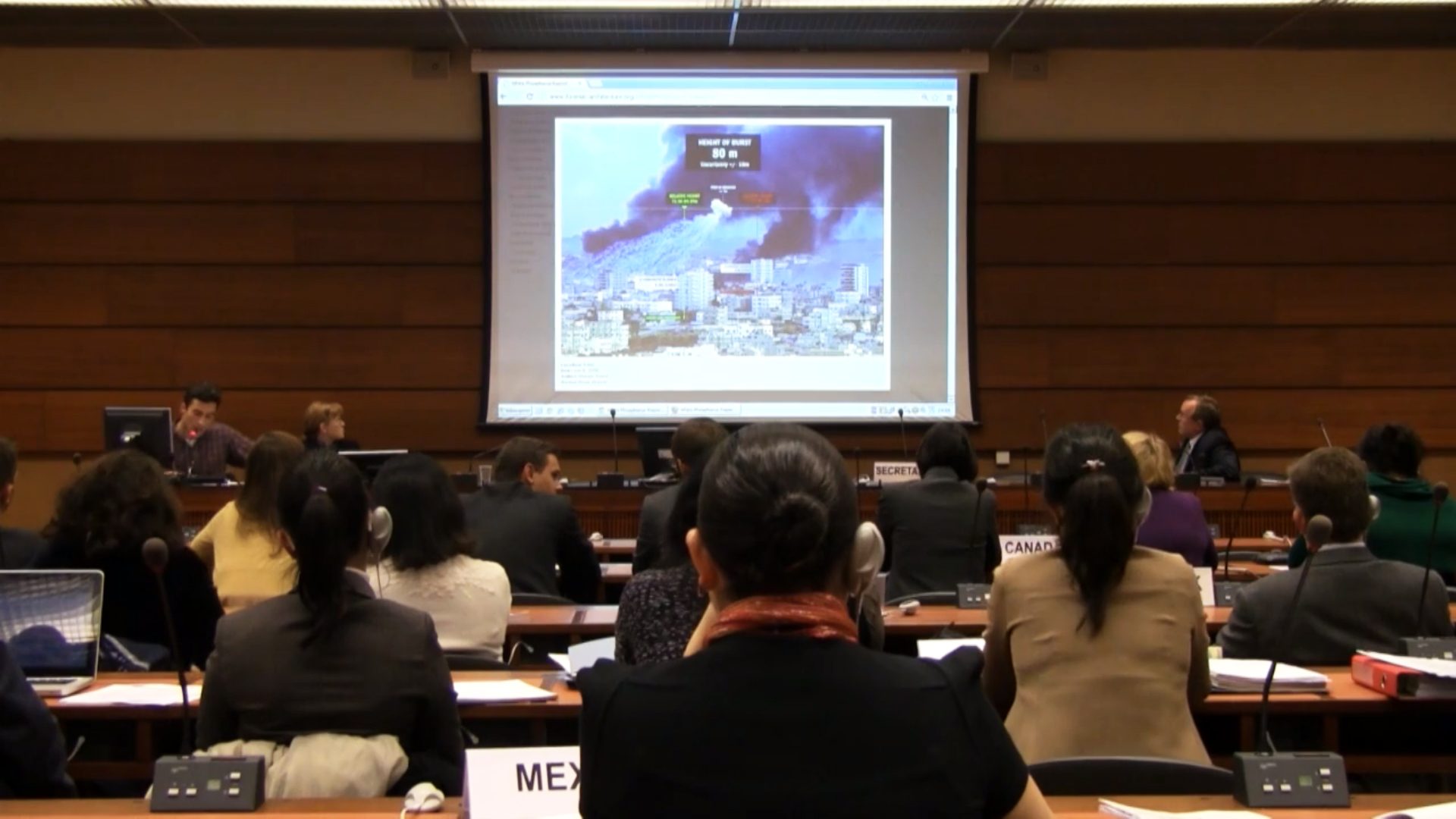
We presented our report to delegates at a November 2012 meeting of the UN Convention on Conventional Weapons (CCW), as part of an advocacy event organised by Human Rights Watch.
No agreement was reached at the meeting, though many state representatives responded enthusiastically to our report. Japan, Israel, and the US were notable in their opposition to a ban on the use of white phosphorus.
Methodology
Our investigation examined of the effect on urban environments of the M825 WP projectile, used by both the Israeli and US militaries. We combined ballistic simulation with spatial analysis and digital reconstruction.
At a pre-calculated height above its target, a charge detonates and breaks apart the M825 WP shell, releasing its contents: 116 wedges made of felt, and soaked in white phosphorus.
We analysed the effects of the projectile on the built environment at both the urban and the architectural scale. A series of computer-assisted simulations were run repeatedly over a typical urban residential area. The resulting points of impact of white phosphorus ‘wedges’ were counted and sorted, the data assembled through this process is analyzed, and statistical conclusions are drawn about the probability of specific ‘damage scenarios’.
The reconstruction of the behaviour of the projectile helped us to determine both the coverage area of the projectile and the damage inflicted upon objects and people in a range of urban contexts.
FA consulted military manuals and with weapons experts. A further crucial source for our research was the news footage and photographs of airburst white phosphorus munitions already in the public domain.
Updates
Update — 5 March 2013
Our report was submitted to Israel’s High Court, in support of a petition demanding a ban on the use of white phosphorus munitions in urban environments by Israel’s armed forces.
Both the military and the State Attorney disputed the admissibility of our report, questioning the competence of architects to provide expertise on military matters.
Update — 25 April 2013
While the admissibility of our report was still being debated, the Israeli military declared it would cease to use white phosphorus shells in populated areas. A senior military commander later explained: ‘As we learned during Cast Lead, [white phosphorus] doesn’t photograph well’.
The Israeli military informed the High Court that it had ordered a ‘significant narrowing’ of the use of these shells.