
- Date
- 11 Jun – 18 Sep 2022
- Exhibition Type
- Group
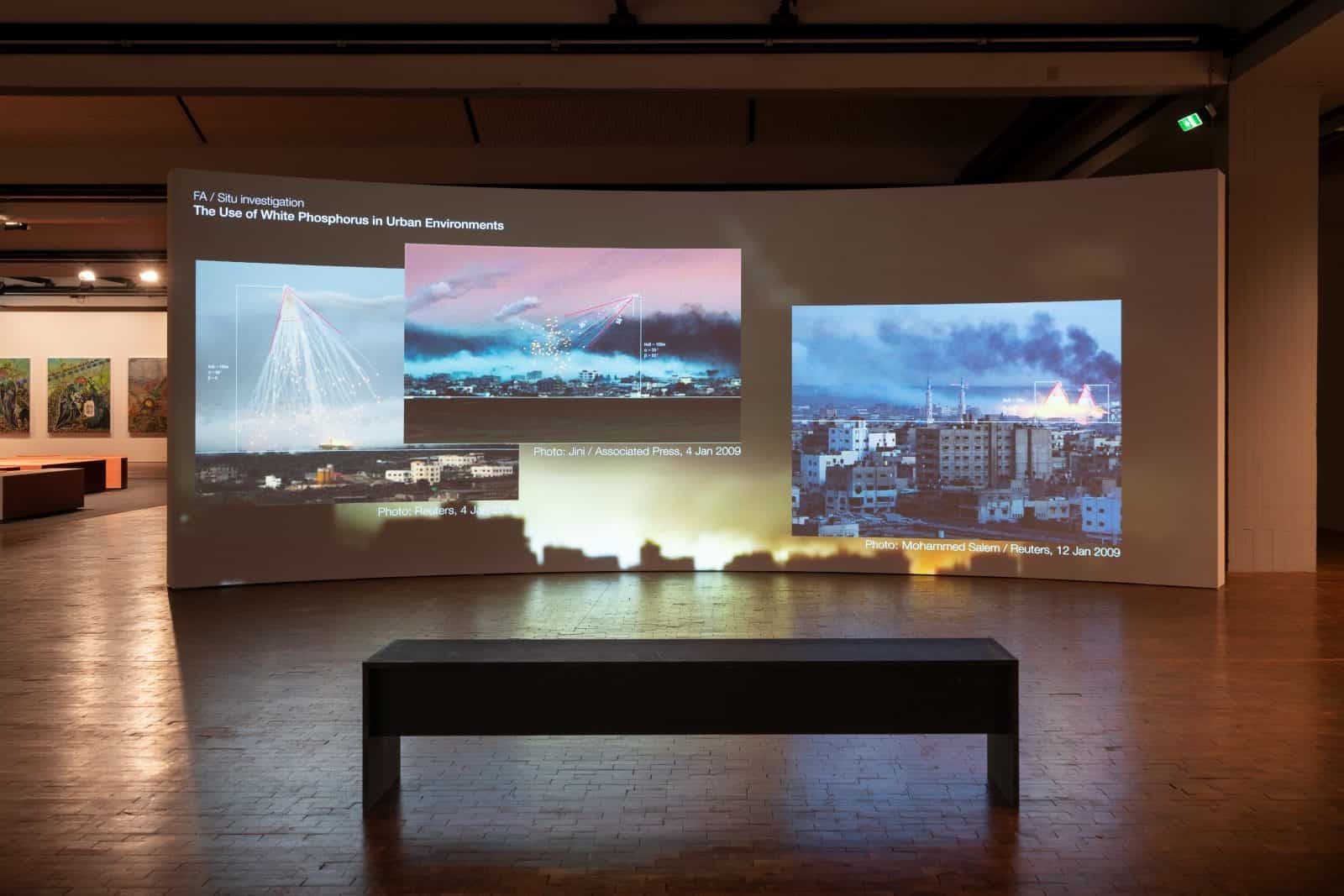
Mobilized by state and corporate powers, toxic clouds colonize the air we breathe on different scales and at varying durations. Repressive regimes use tear gas to clear democratic protests from urban roundabouts. Carcinogenic plumes of petrochemical emissions smother racialized communities. Airborne chemicals such as chlorine, white phosphorous, and herbicides are weaponized to displace and terrorize. Forest arson in the tropics alters continent-wide meteorological conditions, forcing millions to breathe toxic air.
It is a basic principle of forensics that between solid objects “every contact leaves a trace.” In contrast, clouds are the epitome of transformation, their dynamics governed by nonlinear, multicausal logics. This condition has been apparent throughout the history of painting, when clouds moving faster than the painter’s brush could only be imagined rather than recorded.
Clouds are always double. Seen from the outside, they are measurable objects; seen from within, they are experiential conditions of optical blur and atmospheric obscurity. Today’s clouds are both environmental and political. Their toxic fog is easily surrounded by lethal doubt. When denialism obscures acts of violence and compounds the harm it inflicts, we, as cohabitants of toxic clouds, must find new paths of resistance.
Photo credits:
Forensic Architecture, Cloud Studies, Akademie der Künste, Hanseatenweg – photo by dotgain.info
Forensic Architecture and Center for Spatial Technologies, Air Strike on Kyiv TV Tower, Hamburger Bahnhof – Museum für Gegenwart – photo by Laura Fiorio