
- Date
- 07 Nov 2025 – 11 Jan 2026
- Exhibition Type
- Solo
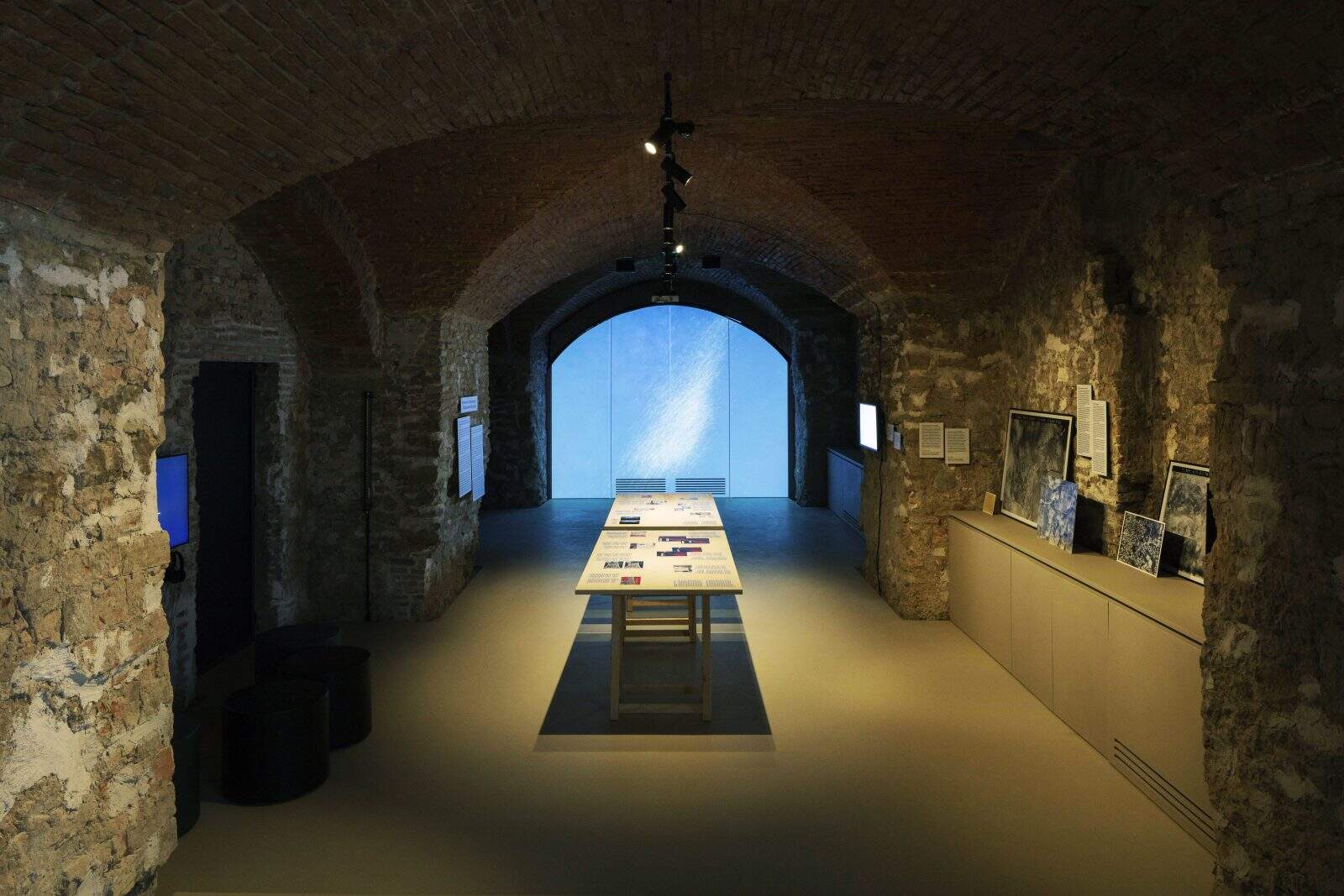
The experience of exile and loss of home and homeland are key features of the long historical continuum that unites the genocide presently unfolding in Gaza and the 1947-9 mass expulsion of Palestinians from their villages by Zionist forces, also known as the Nakba (or ‘catastrophe’ in Arabic). Around two-thirds of Gaza’s population today are refugees, composed of Nakba survivors and their descendants. It therefore is impossible to examine the continued impact of Israeli settler colonialism today without acknowledging the profound multigenerational trauma born of countless cycles of violence, dispossession and displacement.
This exhibition brings together acts and mechanisms of displacement, past and present, and proposes within these a series of strategies—including ‘situated testimony’ interviews and counter-readings of archival materials—to combat the historical amnesia that supports these continuous cycles. Two collaborative reconstructions of living survivors’ pre- and post-Nakba villages, and the crimes committed there by Zionist forces in 1948, are presented alongside one of the tools of recollection and historical recordkeeping that informed the work: hand-drawn ‘memory maps’ of these lost life-worlds. A close account of a Gazan couple’s multiple displacements and detentions is set against a series of studies of Israeli leafleting and weaponisation of evacuation orders, exposing an insidious form of state terror disguised as humanitarian practice. Accounts of attacks on hospitals doubling as shelters reveal concerted efforts by Israel to test the boundaries of its impunity, break down the Palestinian population, and accelerate the process of expulsion.
Through indiscriminate bombardment, ground invasions, and wave upon wave of evacuation orders, Israel has sought to fracture Palestinian society and erode any sense of stability around place or community, to further drive displacement and disincentivize return. Under such conditions, home increasingly becomes a concept divorced from everyday reality, a place to return to in the mind until return in the flesh is possible. Yet even as Gaza’s built environment has been systematically demolished, the besieged population has continued to rebuild with every forced move between apartments, hospitals, makeshift shelters, and tent encampments. In the face of Israel’s ongoing war of erasure, these acts of recollection and reconstruction, large and small, individual and collective, become a fundamental form of resistance through which Palestine is remade again and again.