

- Date of Incident
- 04 Oct 2010
- Location
- Mir Ali, Pakistan
- Publication Date
- 16 Apr 2013
- Commissioned By
- UN Special Rapporteur on Counter Terrorism and Human Rights
- Additional Funding
- None
- Collaborators
- Foundation for Fundamental Rights, UN Special Rapporteur on Counter Terrorism and Human Rights, Reprieve, Amnesty International, Bureau of Investigative Journalism, European Center for Constitutional and Human Rights (ECCHR)
- Methodologies
- Situated Testimony, 3D Modelling
- Forums
- Report of the UN Special Rapporteur for Counter-Terrorism to the UN General Assembly
- Exhibitions
- Forensic Architecture: Towards an Investigative Aesthetics, Forensic Architecture: Hacia una Estética Investigativa, Counter Investigations, Archaeology of the Present: Memory, Media, Matter, Forensis, République Géniale, La Fin Des Cartes, Forensic Architecture: Assembled Practices, Forensic Architecture: To Pattern the Bruised Information, Super Sight: A World Viewed Through Technology, Forensic Architecture: Witnesses
On 4 October 2010, a home on the outskirts of Mir Ali, North Waziristan, was struck by several missiles. The attack killed five people, including some who were suspected of involvement acts of terrorism. Living in the house at that time was a German woman and her infant son.
Following the strike, the woman returned to Germany, where she began to speak publicly, first to human rights advocates and later to the media. She hoped to communicate her personal experience of the reality of living under threat of drone strikes, in order to lend support to campaigns against their continued use.
Some of the details of the strike and its immediate aftermath, however, were obscured from her memory.
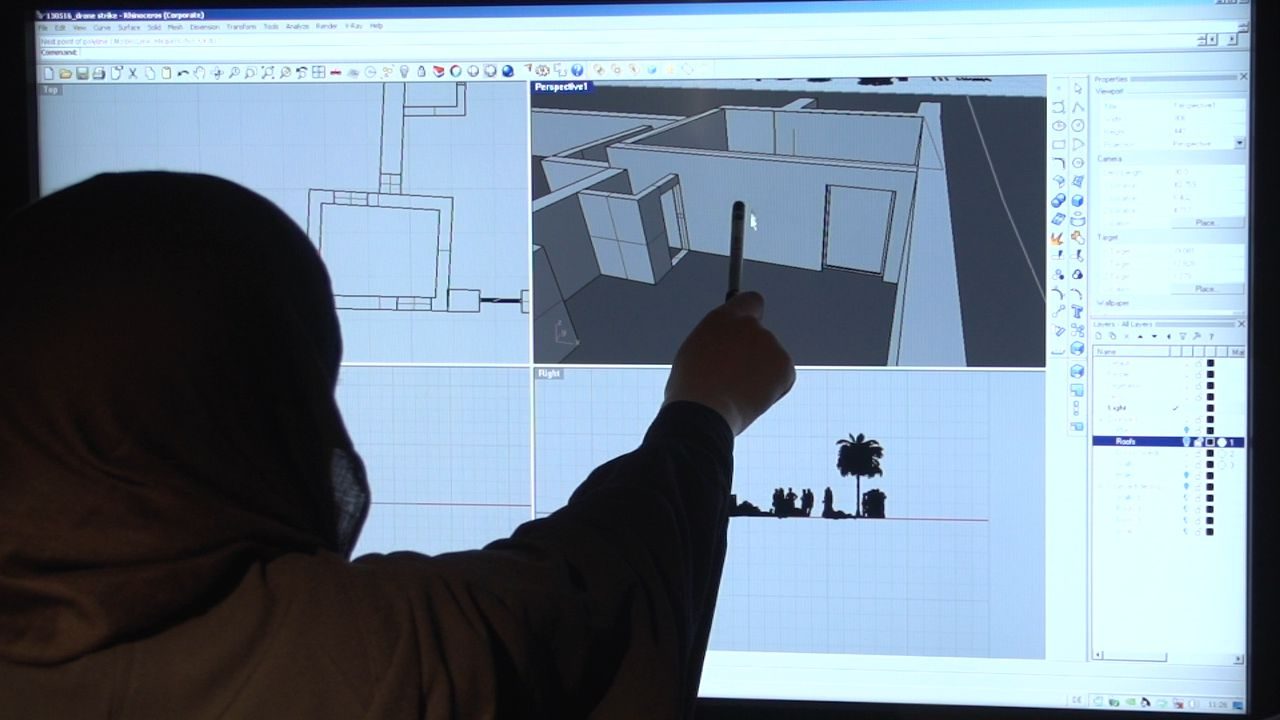
At the invitation of the European Center for Constitutional and Human Rights (ECCHR) Forensic Architecture (FA) traveled to Düsseldorf, Germany, to meet her.
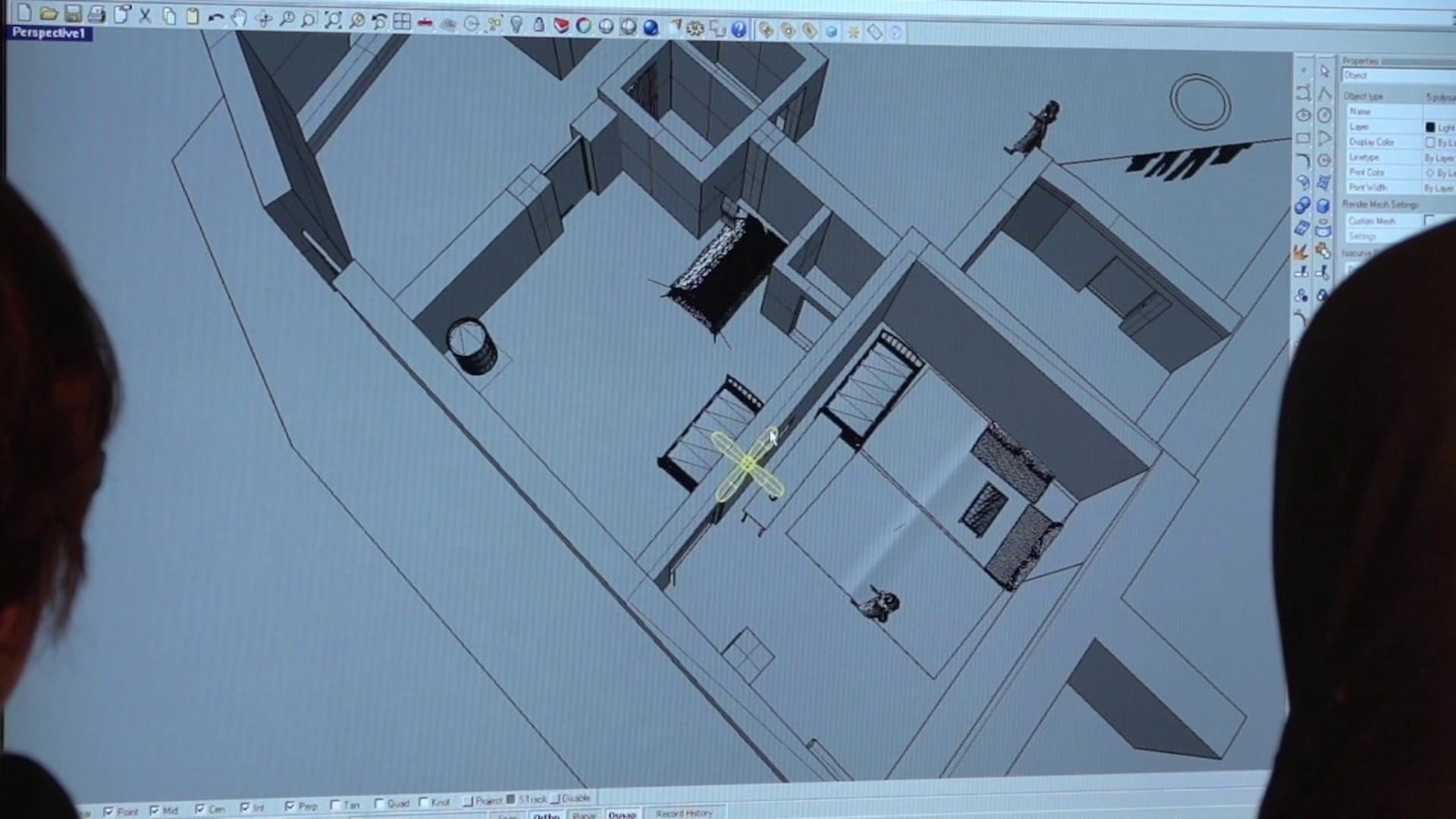
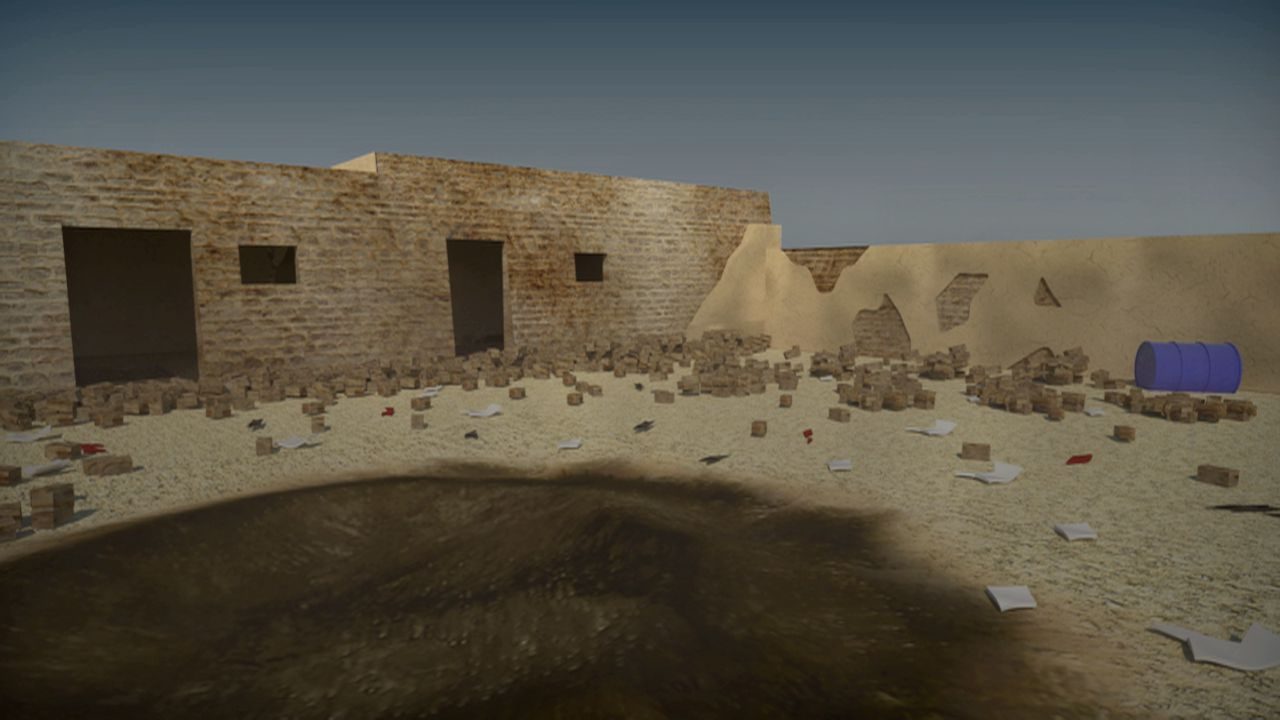
Together with the witness, we reconstructed a digital model of her house, according to her descriptions. This virtual environment then became a medium for testimony: by positioning the witness’ point-of-view within the digital model, we helped her to ‘walk’ through it as if it were her own house.
Empowered by directing this reconstruction process, and by the experience of revisiting the site of such a traumatic episode in a new, manipulable, digital context, the witness began to narrate fragments of her life in the house, and to unlock further memories and details of the strike itself.
In this way, this project saw the genesis of a new element of FA’s practice, a new mode of witness interviewing, that we call ‘situated testimony’.
Methodology
In this case, the role of architecture was not one of material evidence. We had no access to the site, no ruins to study, and no photographs except a satellite image that showed nothing except the blurred contours of her house. In this investigation, architecture is a memory technique, and a conduit to testimony, while the model becomes a stage on which memories are accessed and performed.
When delivering testimony, victims of violence and trauma may find themselves reliving, and experiencing anew, moments of physical pain or the experience of loss. They may remember what happened before a traumatic incident or after it, but as their recollection approaches the heart of a traumatic or violent episode, details can become elusive. Such testimonies are, as a result, rarely straightforward records of events, and should not be interpreted only by what they contain. Rather, what is missing, distorted, or obscured becomes equally instructive.
An important point of reference for this investigation was the classical and medieval tradition of mnemonic techniques. These techniques, employed by rhetoricians such as Cicero and Quintilian in order to remember long and complex speeches, reserved a special place for architecture as a medium for establishing relations between memory and narrative.