

- Date of Incident
- 13 Aug 2014
- Location
- Melilla, Spain
- Publication Date
- 15 Jun 2020
- In Partnership With
- European Center for Constitutional and Human Rights (ECCHR)
- Additional Funding
- European Center for Constitutional and Human Rights (ECCHR)
- Methodologies
- Data Mining, Pattern Analysis
- Forums
- Legal Process, Media
- Exhibitions
- Forensic Architecture: Practices of Verification, Forensic Architecture at Timisoara Architecture Biennial
On 13 February 2020, the Grand Chamber of the European Court of Human Rights (ECtHR) rendered a judgment in the case of ND and NT v. Spain, the first trial to address ‘pushbacks’—the cross-border expulsion of refugees and migrants—at Europe’s land borders.
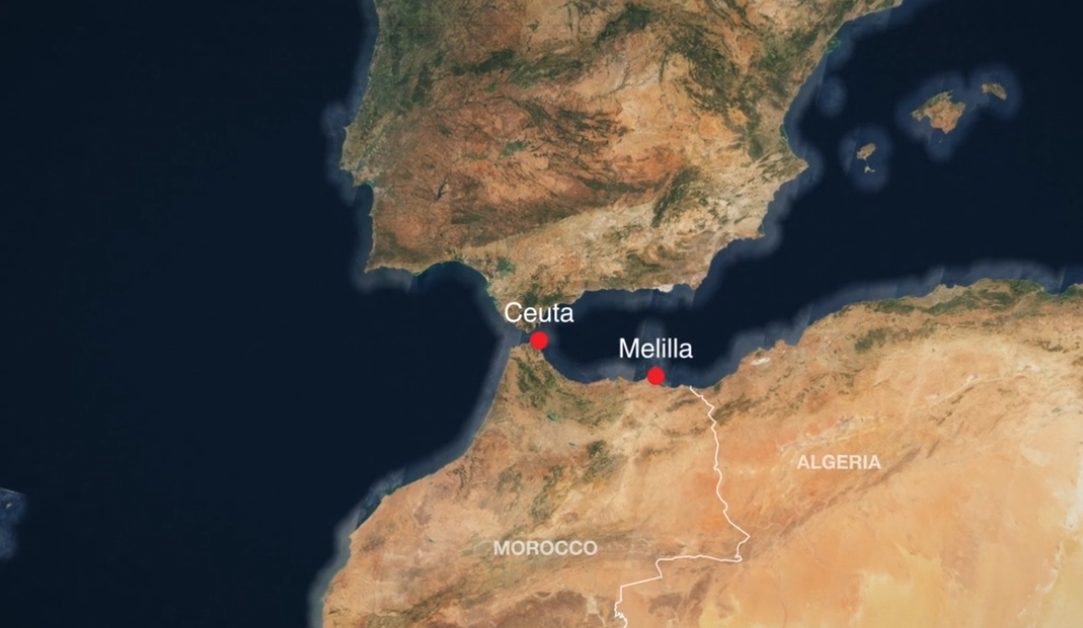
The case concerns the pushback of two men from Mali and Ivory Coast at the Spanish-Moroccan border in Melilla in August 2014. ND and NT had crossed into the Spanish enclave of Melilla by climbing a series of fences at its border, along with a group of other migrants.
The group, including ND and NT, were handcuffed and returned to Morocco by Spain’s paramilitary Guardia Civil, without the opportunity to explain their circumstances or speak to a lawyer.
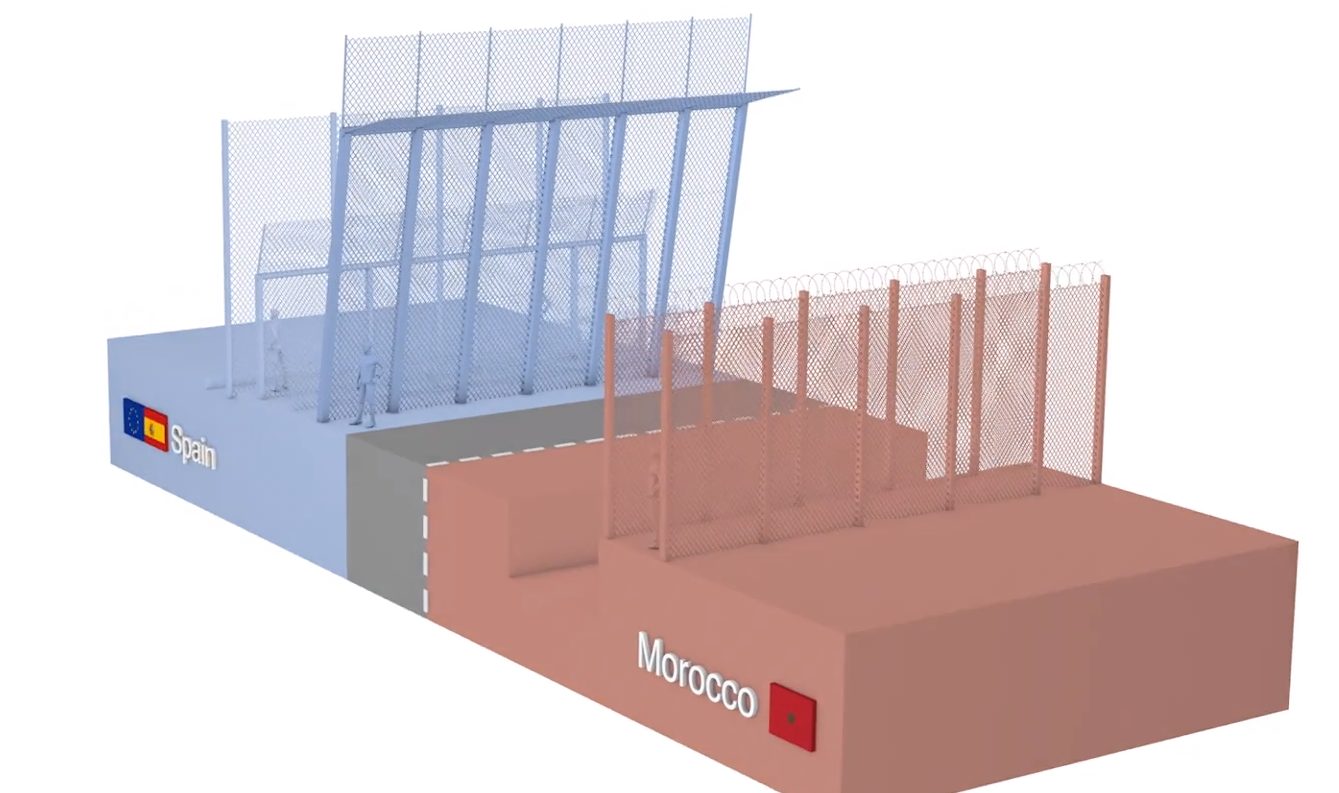
In its judgment, the Court found that those pushbacks did not violate the European Convention on Human Rights (ECHR). In doing so, the Court introduced a new legal exception to human rights at Europe’s borders, creating a dangerous precedent: the Court stated that climbing the border fences was ‘culpable conduct’ on the part of ND and NT, who should have used legal entry procedures instead. The Court accepted that Spain had provided ‘several possible means of seeking admission’, in particular:
- by applying for international protection at the Beni Enzar border crossing point,
- or in Spain’s diplomatic and consular representations.
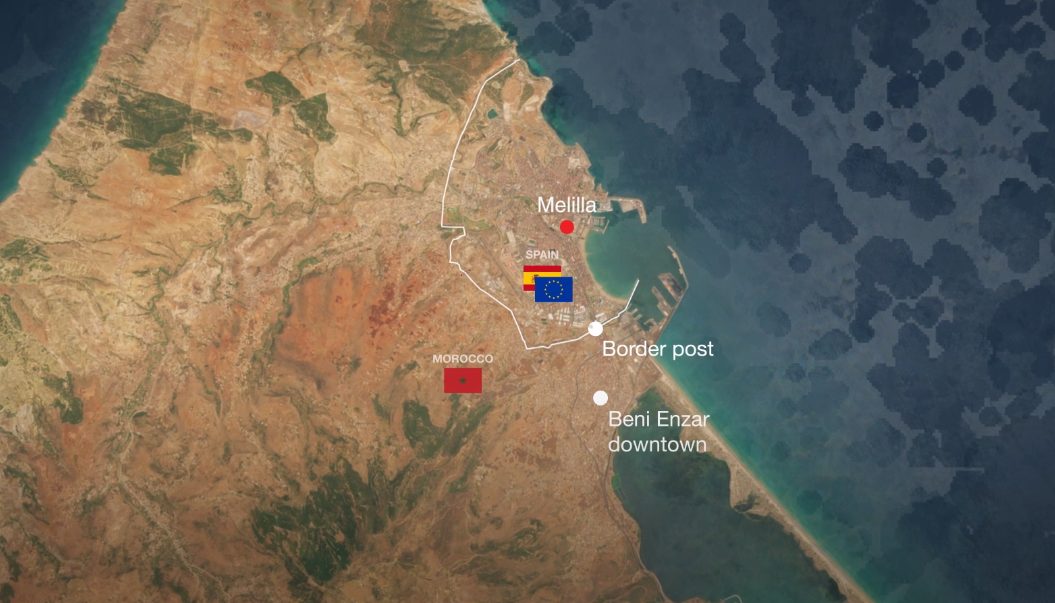
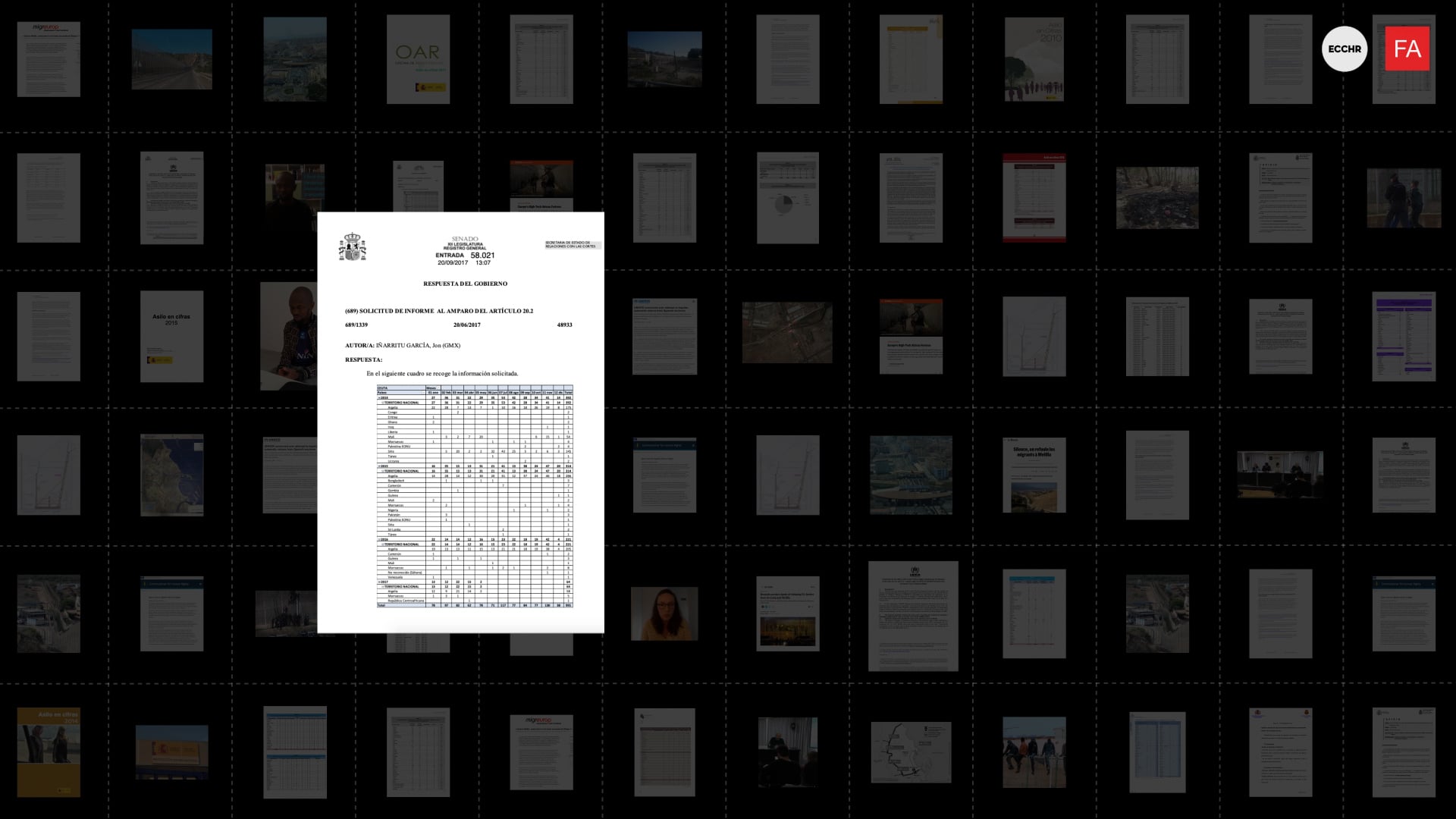
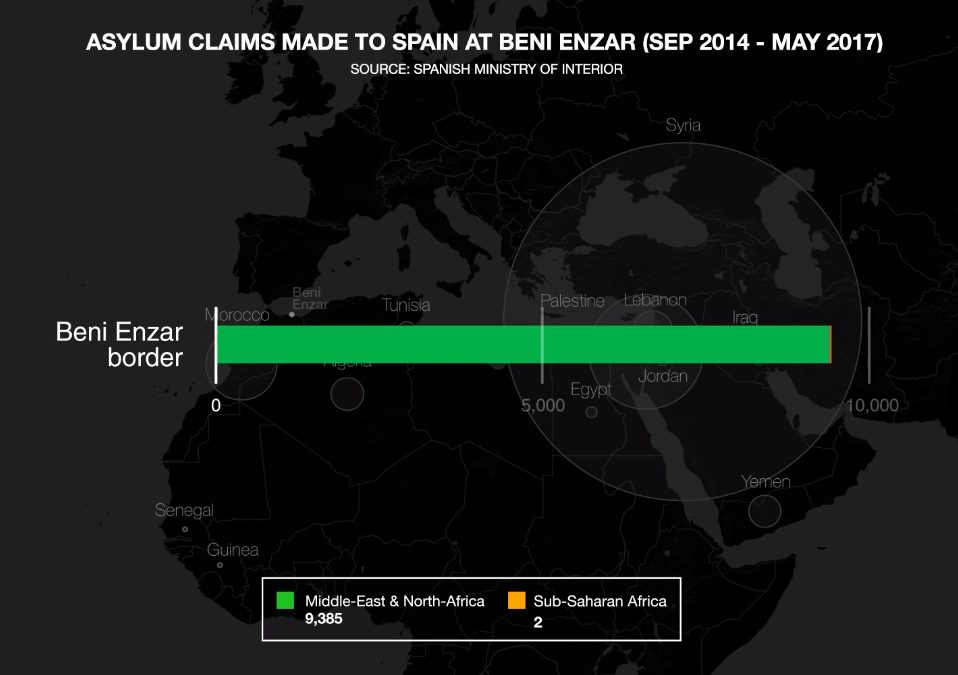
FA and ECCHR investigated whether the legal entry procedures presented to the Court by Spain were in fact available to Sub-Saharan nationals, using spatial analysis, official data from the Spanish government, human rights reports, and testimony.
Our investigation demonstrates that both Spain’s claims and the Court’s conclusions are false, and that Black people from Sub-Saharan Africa are systematically discriminated against at the Melilla border.
In fact, Black people trying to reach the Spanish border in Melilla have to evade a special Moroccan border police force and bypass three Moroccan border checkpoints, at which they are consistently denied passage.
Spain made the claim that legal routes to apply for asylum are available to Sub-Saharan nationals however, gave no evidence to support this claim. In fact, there were only two applications made by Sub-Saharan nationals at the Melilla and Ceuta border posts between September 2014 and May 2017, both of them were women ‘camouflaged with typical Moroccan clothes’ to obscure their skin. According to witness testimony, the consulate in Nador is not accessible to Black Sub-Saharan nationals and there were no applications by Sub-Saharan nationals at any Spanish embassies in Morocco between 2015 and 2018. Nevertheless, the Court accepted Spain’s claims.
The case of ND and NT reveals the mechanisms of structural racism embedded in Europe’s border policies. During the trial, Spain made misleading claims which were contradicted not only by multiple reports and testimonies, but also by their own data. Nevertheless, the Court accepted these arguments, and dismissed those of the claimants. The resulting judgment is a gross distortion of the facts, and fails to acknowledge the realities at Europe’s borders.
This video investigation was submitted to the ECtHR as part of a further case relating to pushbacks at the EU’s borders, ‘Danny’ v Spain.