Torture in Saydnaya Prison
Forensic Architecture

Since 2011, thousands have died in prisons and detention facilities operated by the Syrian government. Tens of thousands of people have been tortured and ill-treated, in violation of international law.

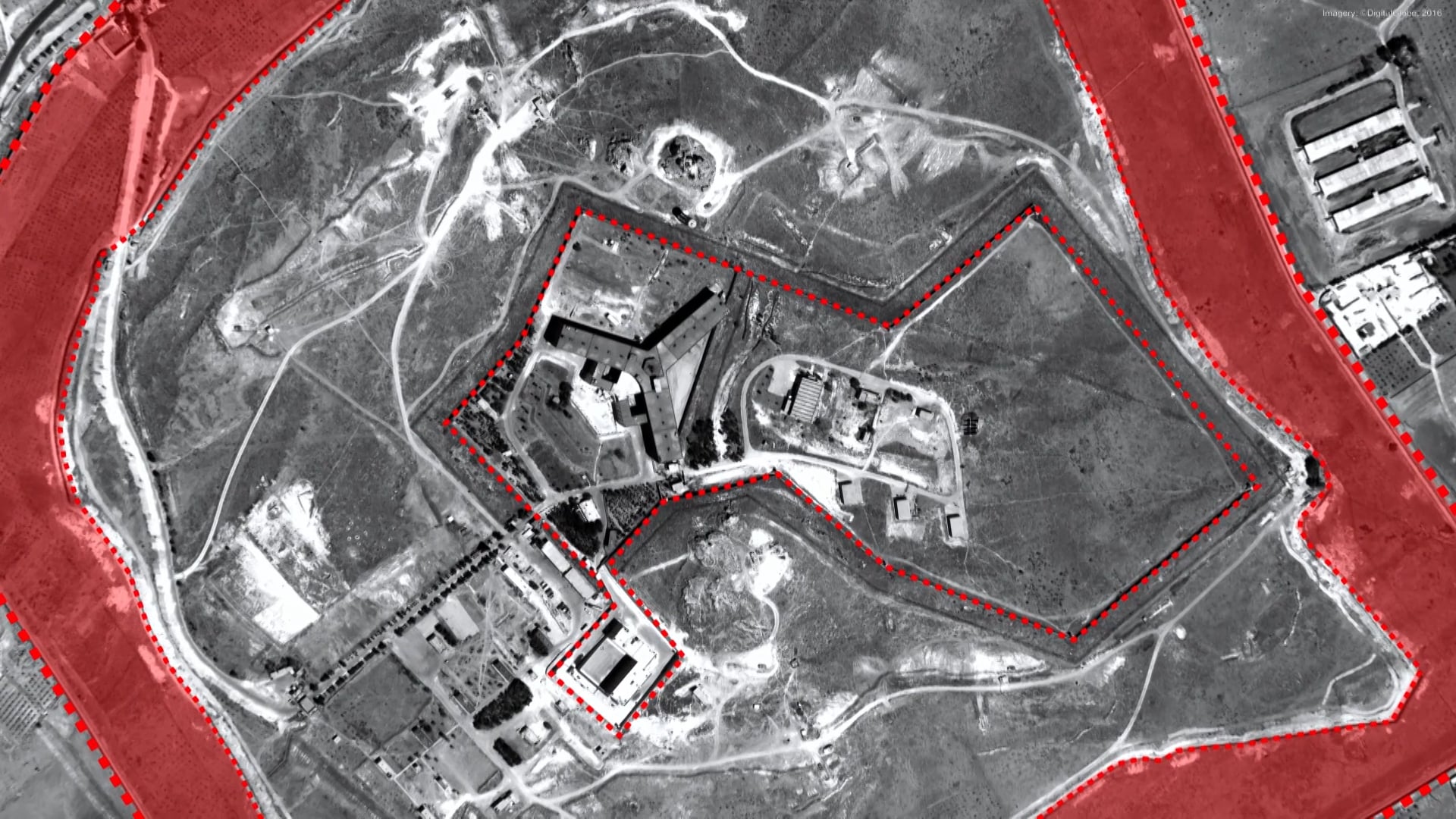
In April 2016, Amnesty International and Forensic Architecture (FA) travelled to Istanbul to meet five survivors from Saydnaya Prison, near Damascus. In recent years, no journalists or monitoring groups which report publicly have been able to visit the notorious prison, or speak with those held there.

As there are no images of Saydnaya in the public domain, our researchers had to work with the memories of survivors to recreate what is happening inside.

Using architectural and acoustic modelling, our researchers helped witnesses reconstruct the architecture of the prison and their experiences of detention.

The former detainees described the cells and other areas of the prison, including stairwells, corridors, moving doors and windows, to an architectural researcher, who would reconstruct the spaces they described.

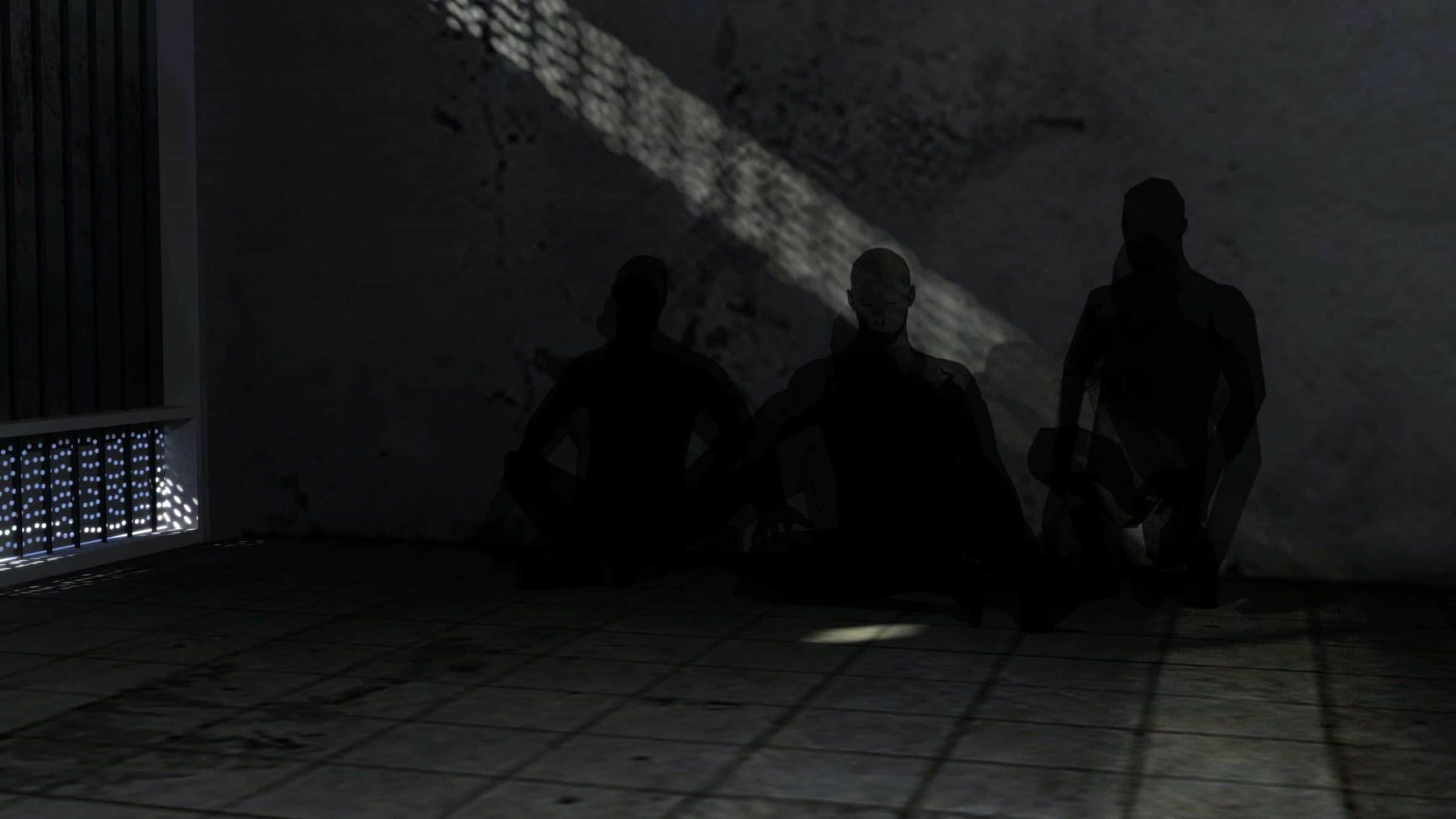
The witnesses also added objects they recalled, from torture tools to blankets and furniture. The recollections sparked more memories as the model developed.

Detainees at Saydnaya are generally transferred to the facility after spending months or even years in detention elsewhere, often following secret military trials. Others arrive at the prison without having seen a judge, and do not know what charges are laid against them, or how long they will be detained.
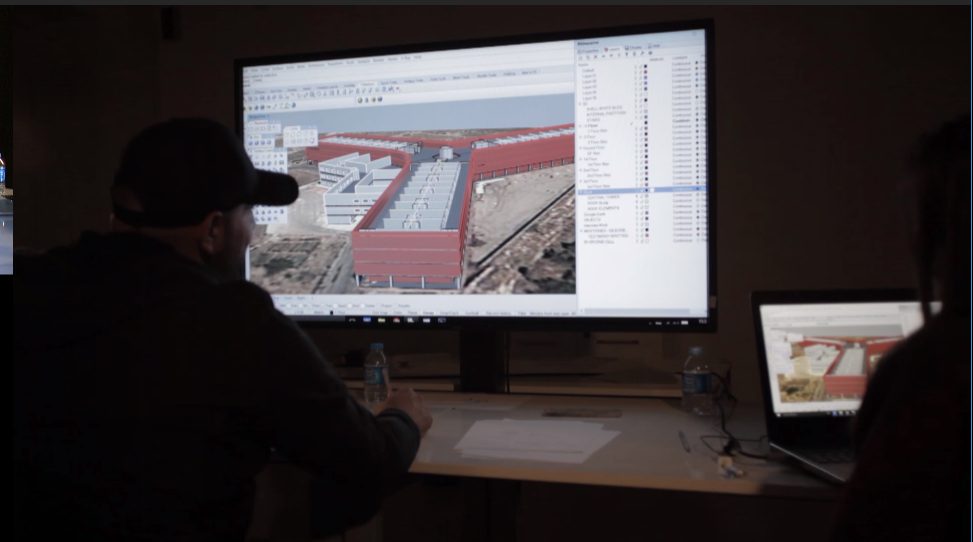
Situated Testimony – 2 - A detainee works with FA researchers to reconstruct Saydnaya prison. (Forensic Architecture)
A detainee works with FA researchers to reconstruct Saydnaya prison. (Forensic Architecture)
Render – Saydnaya cell – 3 - A rendered impression of a cell inside Saydnaya, constructed by researchers from survivors' testimony. (Forensic Architecture)
A rendered impression of a cell inside Saydnaya, constructed by researchers from survivors' testimony. (Forensic Architecture)

The Saydnaya project formed part of a wider campaign led by Amnesty International calling on the Syrian government to allow independent monitors into its detention centres. In 2016, Amnesty called on Russia and the US ‘to use their global influence to ensure that independent monitors are allowed in to investigate conditions in Syria’s torture prisons’.

Methodology

As no images from Saydnaya exist in the public domain, we were dependent on the memories of survivors to recreate what happened inside. Using architectural and acoustic modelling, we helped witnesses reconstruct the architecture of the prison and their experiences of detention.

Before speaking with survivors, Forensic Architecture constructed a 3D model of Saydnaya prison, using written interviews conducted by Amnesty International researchers between December 2015 and February 2016, and satellite images of the building.

Our interview techniques, which we have come to call ‘situated testimony’, were developed by Forensic Architecture at Goldsmiths, University of London, in consultation with the university’s Forensic Psychology Unit.

Through this testimony, witnesses became active participants in the building of the model, helping our team to correct errors within it. The process sparked new memories of their experiences: as they measured rooms, located windows and doors, and placed objects in the virtual environment, they recalled more fragments of their life in detention.

Updates

Update — 7 February 2017

Amnesty published a second report on Saydnaya, based in part upon information derived from the ‘situated testimony’ conducted with FA in April 2016.

The new report alleges that Saydnaya is not only a torture prison and a site of illegal detention, but also the site of mass executions on an industrial scale, estimating that as many as 13,000 people have been executed there since 2011.

The report, entitled Human Slaughterhouse, receives widespread media coverage across Europe, the U.S. and the Middle East.

Update — 15 May 2017

The US State Department shared newly declassified information relating to Saydnaya prison.

The State Department believes it has identified the site of a crematorium within the Saydnaya complex, adding further evidence to Amnesty International’s claim that the prison is being used as a site of execution by the Assad regime.

Forensic Architecture Team
Principal Investigator
Project & Research Coordinator
Interviewing
Acoustic Investigator
Video Co-Production, Co-Direction & Videography in Istanbul
Video Editing
Website Design & Development
Research
3D Panoramas
Camera
Sound Mixing
Research Assistance
Video Editing Assistance & Translation
Project Support
Advisors
Extended Team
Thanks to
SALT Galata
Department of Computing, Goldsmiths, University of London
Department of Psychology, Goldsmiths, University of London
Collaborators
Exhibitions
22 Oct 2023 – 07 Apr 2024
Super Sight: A World Viewed Through Technology
Sune Jonsson Centrum för Dokumentärfotografi
19 May – 22 Oct 2022
Forensic Architecture: Witnesses
Louisiana Museum of Modern Art, Humlebaek, Denmark
10 Oct 2020 – 30 May 2021
Beyond the Pain
Galerie Stadt Sindelfingen, Sindelfingen, Germany
15 Jan – 15 Apr 2020
Forensic Architecture: Assembled Practices
A. M. Qattan Foundation, Ramallah
17 Aug – 11 Nov 2018
République Géniale
Kunstmuseum Bern, Bern, Switzerland
28 Apr – 07 Jul 2018
Unsettlement
Monash University Museum of Art (MUAM), Melbourne, Australia
07 Mar – 13 May 2018
Counter Investigations
The Institute of Contemporary Arts (ICA), London
28 Feb – 21 Apr 2018
The Architecture of Conflict
VI PER Gallery, Prague, Czech Republic
11 Nov 2017 – 08 Apr 2018
Beautiful New Worlds: Virtual Realities in Contemporary Art
Zeppelin Museum, Friedrichshafen
09 Sep – 30 Dec 2017
Forensic Architecture: Hacia una Estética Investigativa
Museo Universitario Arte Contemporáneo (MUAC), Mexico City, Mexico
28 Apr – 15 Oct 2017
Forensic Architecture: Towards an Investigative Aesthetics
Museu d’Art Contemporani de Barcelona (MACBA), Barcelona, Spain
29 Sep – 01 Oct 2016
Saydnaya: Inside a Syrian Torture Prison
Akademie der Künste, Berlin, Germany
Events
13 Nov 2022
Forensic Architecture program at IDFA
De Balie
13 Oct 2020
Forensic Architecture and Forensic Oceanography at Film i Samtidskonsten
Zita People's Bio Birger Jarlsgatan, Stockholm
10 Oct 2020 – 30 May 2021
BEYOND THE PAIN
Galerie Stadt Sindelfingen, Sindelfingen, Germany
15 Jan – 15 Mar 2020
Forensic Architecture: Assembled Practices
A. M. Qattan Foundation, Ramallah
15 Nov 2018
Propositions #7/3: Testify
BAK, Utrecht, Netherlands
17 Aug – 11 Nov 2018
République Géniale
Kunstmuseum Bern, Bern, Switzerland
07 Mar – 13 May 2018
Counter Investigations: Forensic Architecture
Institute for Contemporary Art, London, UK
28 Feb – 21 Apr 2018
The Architecture of Conflict
VI PER Gallery, Prague, Czech Republic
11 Nov 2017 – 08 Apr 2018
Beautiful New Worlds
Zeppelin Museum, Friedrichshafen, Germany
18 Oct 2017 – 18 Feb 2018
Beazley Designs of the Year 2017
The Design Museum, London, UK
08 Sep 2017 – 07 Jan 2018
The Other Architect
Het Nieuwe Instituut, Rotterdam, Netherlands
09 Jun 2017
Trafficking of Cultural Goods: 3D modelling and digital colonialism
The Photographers Gallery, London, UK
27 May 2017
Freiburger Filmforum
Kommunales Kino, Freiburg im Breisgau, Germany
29 Sep – 01 Oct 2016
Saydnaya: Inside a Syrian Torture Prison
Akademie der Künste, Berlin, Germany
Press
29 Oct 2020
ASAP Journal
Saydnaya and Saydnaya: Public testimony, affect, and the relationship between the visual and the aural
08 Sep 2020
Witness by Amnesty International
Episode 1: The Party
21 Jan 2020
Architecture Now
Signs of Use and Past Presences
19 Mar 2019
PBS Newshour
Silenced at ‘the University of Whispers,’ an Assad Prison Survivor Can Now Tell His Story
26 Feb 2018
Worker’s World
Wars, Lies and NGOs: Amnesty International’s report on Syria
21 Feb 2018
Co.Design
How Forensic Architecture Revealed Details of a Secret Military Prison in Syria
03 Jan 2018
Journal of Visual Culture
Book Review: Eyal Weizman, Forensic Architecture: Violence at the Threshold of Detectability
21 Nov 2017
Bento
Eine Gruppe Junger Architekten Hat Syriens Schlimmstes Foltergefängnis in 3d Nachgebaut
01 Jun 2017
Syria Deeply
How the Syrian War Changed How War Crimes Are Documented
01 Jan 2017
1000 Words
Saydnaya: Inside a Syrian torture prison
13 Nov 2016
VPRO Tegenlicht
De Burgerdetectives
03 Sep 2016
Haaretz
What's It Like to Be a Prisoner in a Syrian Torture Prison: A virtual experience
23 Aug 2016
NewEurope
Digital Model of Syria’s Hidden Prison Released
19 Aug 2016
Global Voices
‘When They Took Me Inside’ Syria's Saydnaya Prison, ‘I Could Smell the Torture’
19 Aug 2016
Dezeen
Forensic Architecture Forms Digital Reconstruction of Syrian 'Architectural Instrument of Torture'
18 Aug 2016
Middle East Eye
A Virtual Tour of Syria’s Most Notorious Torture Prison
18 Aug 2016
WIRED
See Inside Syria's Brutal Saydnaya Prison with This Digital Reconstruction
18 Aug 2016
The Guardian
'The Worst Place on Earth': Inside Assad's brutal Saydnaya prison
18 Aug 2016
PRI
You Can Now Take a Virtual Tour of Assad’s Notorious Torture Prison in Syria
18 Aug 2016
Zeit Online
Folter Und Tausende Tote in Syrischen Gefängnissen
17 Aug 2016
ArchDaily
Forensic Architecture Digitally Reconstruct Secret Syrian Torture Prison from the Memories of Survivors
Recognition
Nominated: Beazley Designs of the Year 2017 (Digital Category)
Winner: Digital Dozen 2016 Award for Breakthroughs in Storytelling
Publications
Forensic Architecture: Violence at the Threshold of Detectability
Related Investigations
The Beating of Faisal al-Natsheh
Occupied Hebron, Palestine · 28 Feb 2014
Torture and Detention in Myanmar
Myanmar · 01 Feb 2021 – Ongoing