
- Date
- 17 May – 22 Sep 2019
- Exhibition Type
- Group
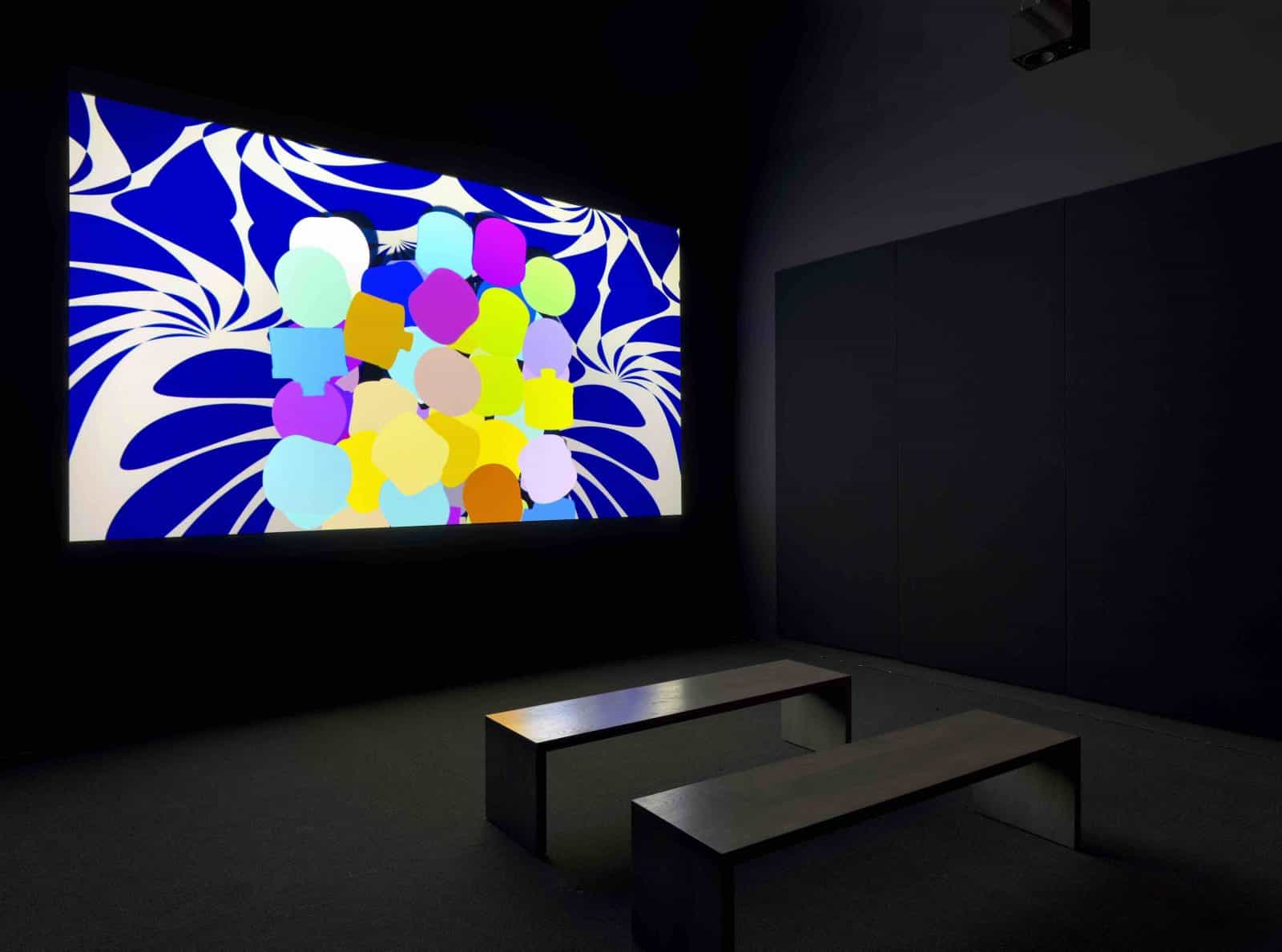
For the Whitney Biennial 2019, Forensic Architecture (FA) and Praxis Films present a video investigation into Warren B. Kanders, vice chair of the board of trustees of the Whitney Museum of American Art and CEO of the Safariland Group–one of the world’s major manufacturers of so-called ‘less-lethal’ munitions.
Click here to see the full investigation
Whereas the export of military equipment from the United States is a matter of public record, the sale and export of tear gas is not. As a result, it is only when images of tear gas canisters appear online, such as they did after US agents fired tear gas grenades at civilians along the San Diego-Tijuana border in November 2018, that the public can know where they have been sold and who is using them. Forensic Architecture is training computer vision classifiers to automatically detect one of Safariland’s tear gas grenades, the Triple-Chaser.
The task of training a computer vision classifier to identify a particular object usually requires thousands of images of that object. However, images of the munitions like the Triple-Chaser are relatively rare. To fill the gap, we constructed a digital model of the Triple-Chaser, and created a set of ‘synthetic’ images by placing the model against bold, patterned backgrounds, and within photorealistic digital environments. In this way, ‘fake’ images help us to search for real ones—so that the next time Safariland munitions are used against civilians, we’ll know.
Above: Installation view of the Whitney Biennial 2019 (Whitney Museum of American Art, New York, May 17-September 22, 2019). Forensic Architecture, Triple Chaser, 2019. Photograph by Ron Amstutz
 Counter Investigations: Police Violence
In addition to Triple-Chaser, Forensic Architecture presents at the Whitney Biennial 2019 the following weekly schedule of our video investigations of police violence. Beginning in June, we will screen a different case each day in which we investigated the involvement of the police and other security forces in the killing of civilians.
Saturday 1pm, 5pm, and 9pm
Yakub Musa Abu al-Qi’an – Umm al Hiran, Israel/Palestine, 2017
2017-2019, 30min (two consecutive screenings)
Two died when Israeli police raided the Bedouin village of Umm al-Hiran. Officials described the incident as a terror attack. Our work, with residents of the village and the documentary photography collective Activestills, exposed lies by police and politicians.
Sunday 1pm and 5pm
Tahir Elçi – Diyarbakir, Turkey, 2015
2019, 26min (two consecutive screenings)
Against a background of rising tensions in Turkey’s Kurdish-majority southeast, the killing of an internationally renowned human rights lawyer was a seismic event. Our frame-by-frame analysis of the video evidence determined who should be considered a suspect.
Monday 1pm and 5pm
Pavlos Fyssas – Athens, Greece, 2013
2018, 38min (two consecutive screenings)
The rise of the Golden Dawn has revealed connections between Greece’s police and its resurgent neo-Nazi underground. When one of their members murdered a popular anti-fascist rapper, we exposed the uncomfortable proximity of elite police units to the incident.
Tuesday (when open) 1pm and 5pm
Yakub Musa Abu al-Qi’an – Umm al Hiran, Israel/Palestine, 2017
2017-2019, 30min (two consecutive screenings)
As above, Saturday.
Wednesday 1pm and 5pm
The 43 Students from Ayotzinapa – Iguala, Mexico, 2014
2017, 18min (two consecutive screenings)
When Mexican police and organised crime coordinated to attack a group of students, six civilians were murdered, and more than forty ‘disappeared’. We revealed the extent of collusion between the police, military, and organised crime, and the state’s attempt to conceal the evidence.
Thursday 1pm and 5pm
Nadeem Nawara and Mohammed Abu Daher – Bitunia, Israel/Palestine, 2015
2015, 15min (three consecutive screenings)
When Israeli police shot and killed two Palestinian teenagers, the event was captured by security cameras, a CNN news team, and photojournalists. We identified the policeman responsible, and showed how he had disguised his use of live ammunition as non-lethal rounds.
Friday 1pm, 5pm, and 9pm
Halit Yozgat – Kassel, Germany, 2006
2017, 29min (two consecutive screenings)
A German intelligence agent was sitting just metres away when a Turkish-German man was shot to death by neo-Nazis. The agent later claimed that he didn’t hear the gunshots, didn’t smell the gunpowder, and didn’t see the body. Using digital models and physical reconstructions, we challenged those claims.