- Date of Incident
- 19 Feb 2022
- Location
- Normandale Park, Portland, Oregon
- Publication Date
- 19 Feb 2024
- Commissioned By
- Self-Initiated
- Additional Funding
- None
- Collaborators
- None
- Methodologies
- 3D Modelling, Fieldwork, Situated Testimony
- Forums
- Exhibition, Media
- Exhibitions
- Policing Justice
This investigation is on display at the Portland Institute for Contemporary Art until 19 May 2024.
Read the Guardian’s coverage of the case, by our investigative reporter Robert Mackey, here.
CLOSED CAPTIONS for this film are available at this Vimeo page.
In the summer of 2020, Portland, Oregon emerged as a frontline of racial justice protests in the US, following the killing of George Floyd, Breonna Taylor, and other Black Americans in encounters with police across the country.
Around those protests, increasingly sophisticated community practices sprang up to protect and support demonstrators. One such practice, refined during nearly 200 consecutive days of activism in Portland, is known as ‘corking’, and involves re-routing traffic to enable marchers to move safely through urban environments.
June Knightly was part of an antifascist affinity group dedicated to corking, part of a wider network of affinity groups that also offered medical support, de-escalation, and even volunteer armed guards to a wide range of protests in support of progressive causes.
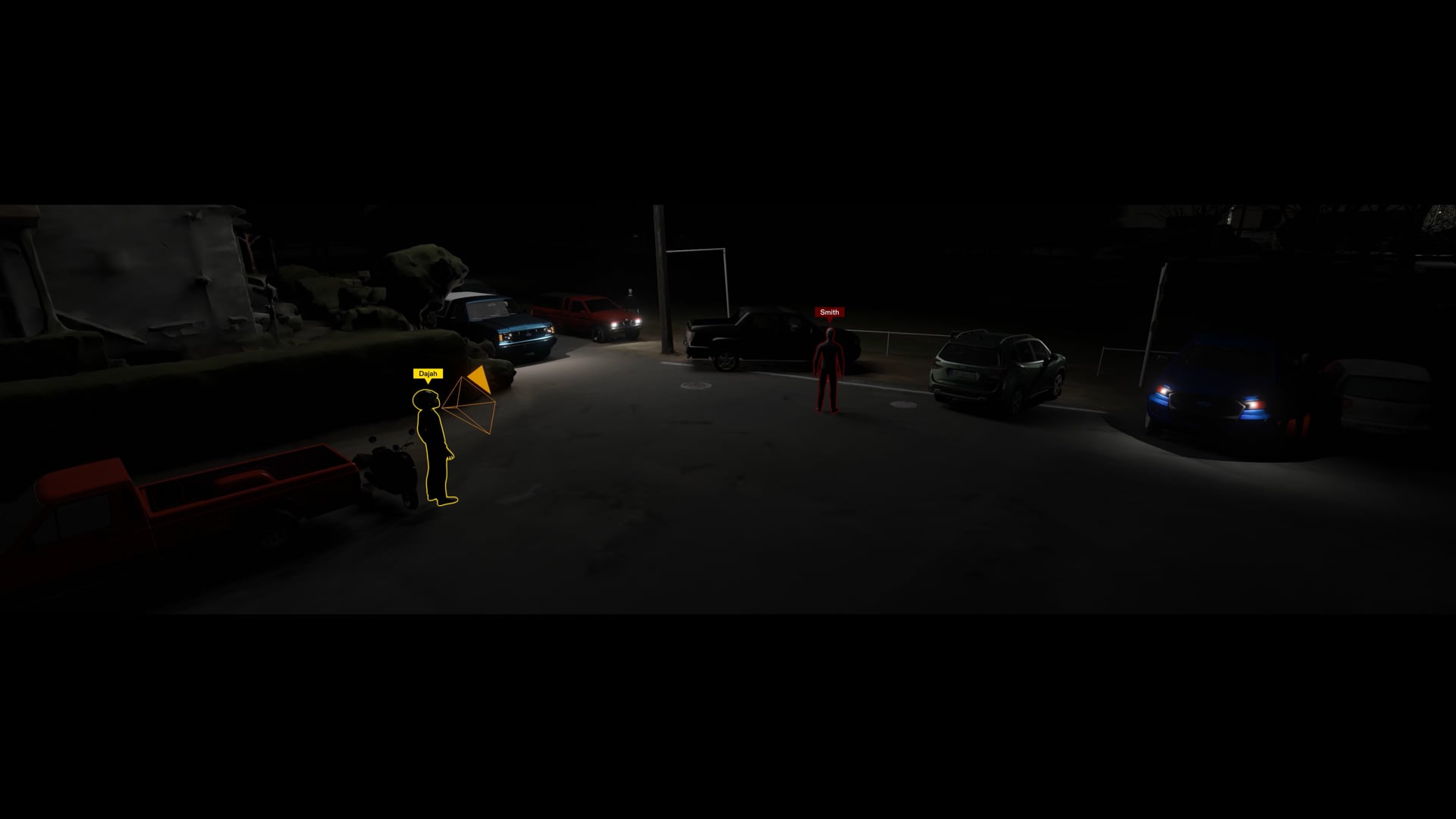
On the evening of 19 February 2022, June — known as ‘T-Rex’ — and other corkers met on the west side of Normandale Park, preparing to support a march under the banner Justice for Patrick Kimmons (JFPK), a regular demonstration for racial justice led by the mother of Patrick Kimmons, a black man killed by officers of the Portland Police Bureau (PPB) in 2018.
Before the march started, June was murdered, and four of her friends seriously injured, in an attack by a right-wing extremist whose views had been shaped by the reactionary rhetoric of political leaders and online influencers.
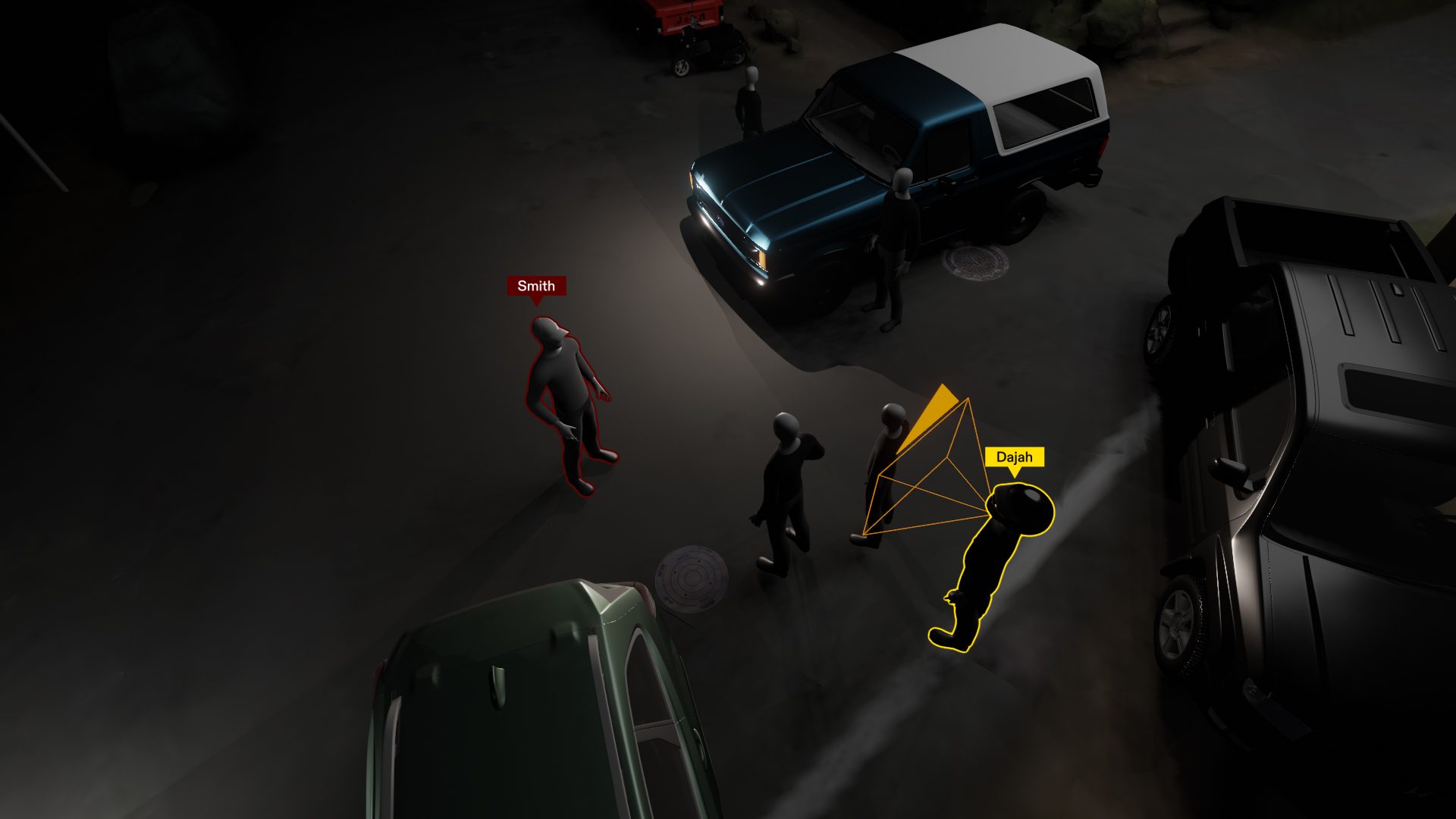
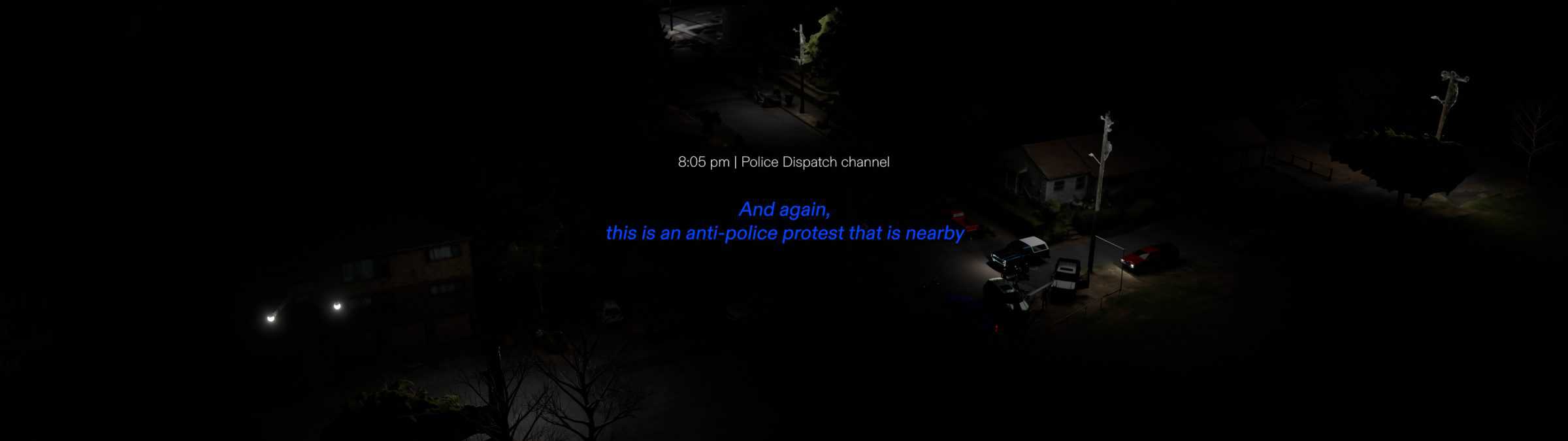
The group was ultimately victimized twice: first by the gunman, and later by the PPB, which falsely suggested in public statements that June died during a ‘confrontation’ between ‘armed protesters’ and ‘an armed homeowner’. In fact, video evidence seen by the police clearly showed that the attack was unprovoked, and the victims were unarmed.
That video evidence convinced prosecutors and homicide detectives to release without charge an armed guard for the protest, who rushed to the scene and stopped the mass shooting by wounding the attacker and disarming him. But the PPB’s version of events, publishe dafter the guard was released, was amplified in local and national news reports, sowed fear and division in the community and remains uncorrected on the police website to this day.
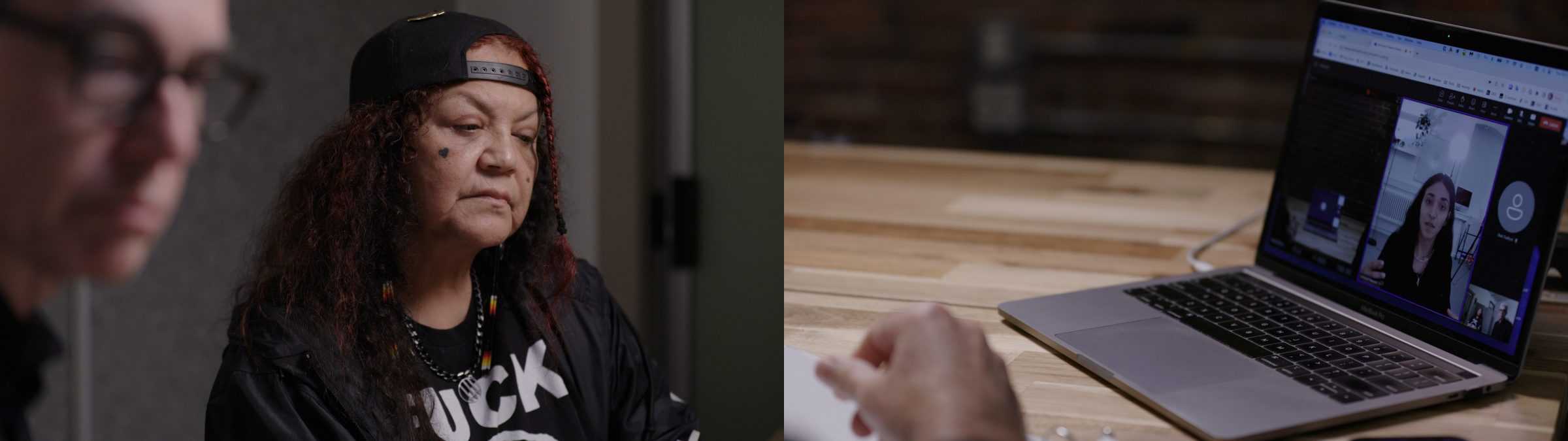
Forensic Architecture (FA) interviewed witnesses and survivors of the Normandale Park attack using a navigable digital 3D model of the scene, built from previously unpublished video of the attack recorded by one of the victims, drone images and video of the police response posted on social media. The interviews were conducted remotely; one FA team member sat with the interviewees in person, in Portland, while the digital model was navigated – and constructed – by FA researchers in London.