The Black Boxes of Disappearance: Enforced Disappearance in the Siege of the Palace of Justice
Forensic Architecture
The Black Boxes of Disappearance: Enforced Disappearance in the Siege of the Palace of Justice
Date of Incident
06 Nov 1985 – 07 Nov 1985
Location
Bogotá, Colombia
Publication Date
10 Dec 2021
Commissioned By
The Commission for the Clarification of Truth, Coexistence and Non-Repetition of Colombia
Additional Funding
Open Society Foundations (OSF), United Nations Development Programme (UNDP)
Collaborators
Colectivo de Abogados José Alvear Restrepo, Dh Colombia, Programar Televisión S.A., Fundación Patrimonio Fílmico Colombiano
Forums
Legal Process, Exhibition, Media, Truth Commission, Web Platform

On 6 November 1985, a guerrilla group known as M19 stormed the Palace of Justice in Bogotá, taking state officials and members of the Colombian Supreme Court hostage. Security forces initiated a counter-siege that lasted two days, leaving over a hundred dead and large parts of the building burned.

Instead of focusing on what happened inside the Palace between the guerrillas and the military, a new visual investigation by FA and the Truth Commission examines the logistics of the military in their counterinsurgency operation and what happened to certain individuals once they left the building.

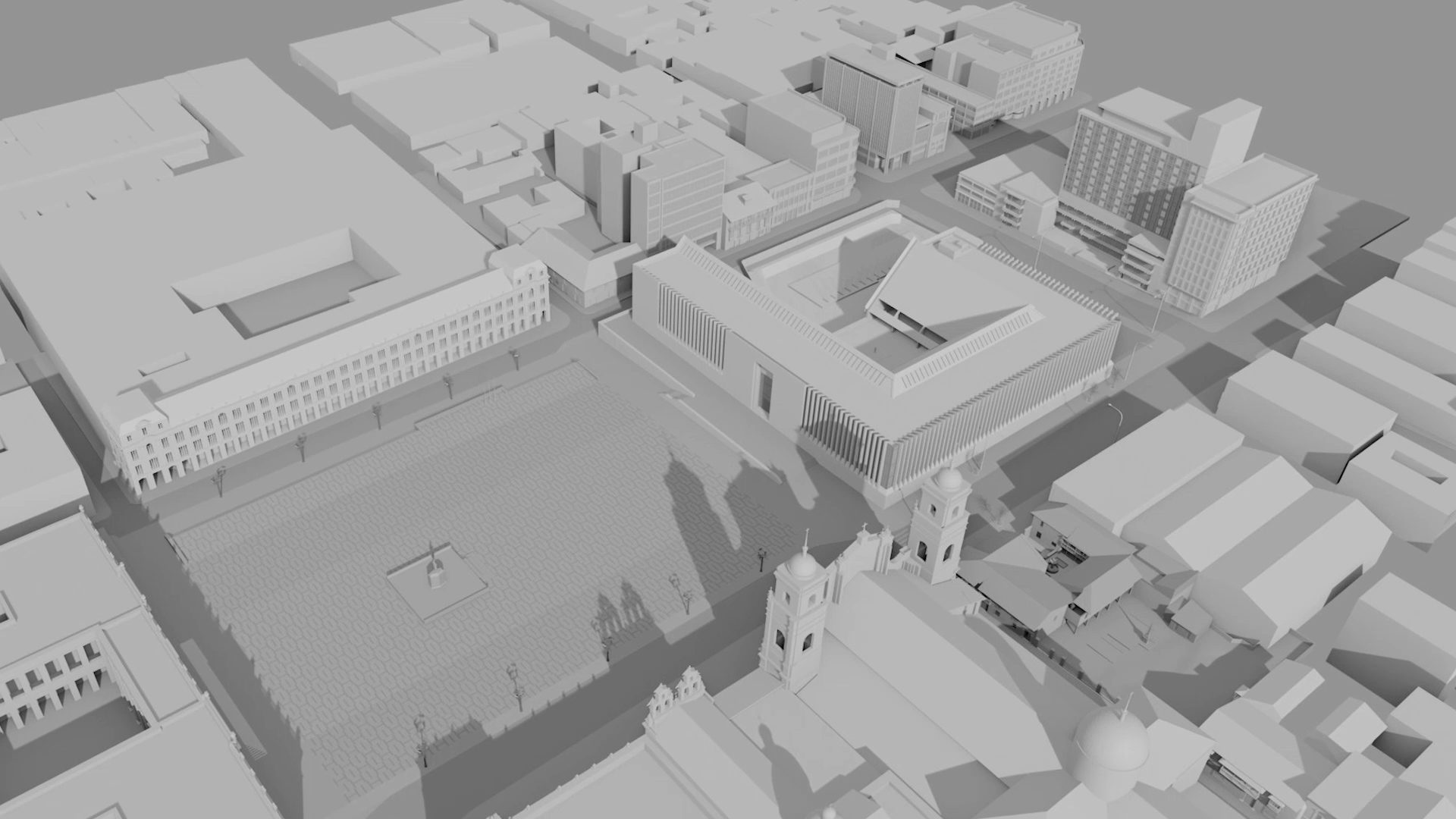
Cajas Negras – Image 1 - 3D model of the Palace of Justice and Plaza de Bolivar (Modelo 3D del Palacio de Justicia y la Plaza de Bolívar), Cajas Negras (2021), Forensic Architecture
3D model of the Palace of Justice and Plaza de Bolivar (Modelo 3D del Palacio de Justicia y la Plaza de Bolívar), Cajas Negras (2021), Forensic Architecture

The joint research shows how cafeteria workers, students, visitors, guerrillas, and judges were classified as ‘special’ or ‘suspects’, detained, taken to different military facilities across the city, tortured, executed and in some cases, forcibly disappeared by the Colombian armed forces.

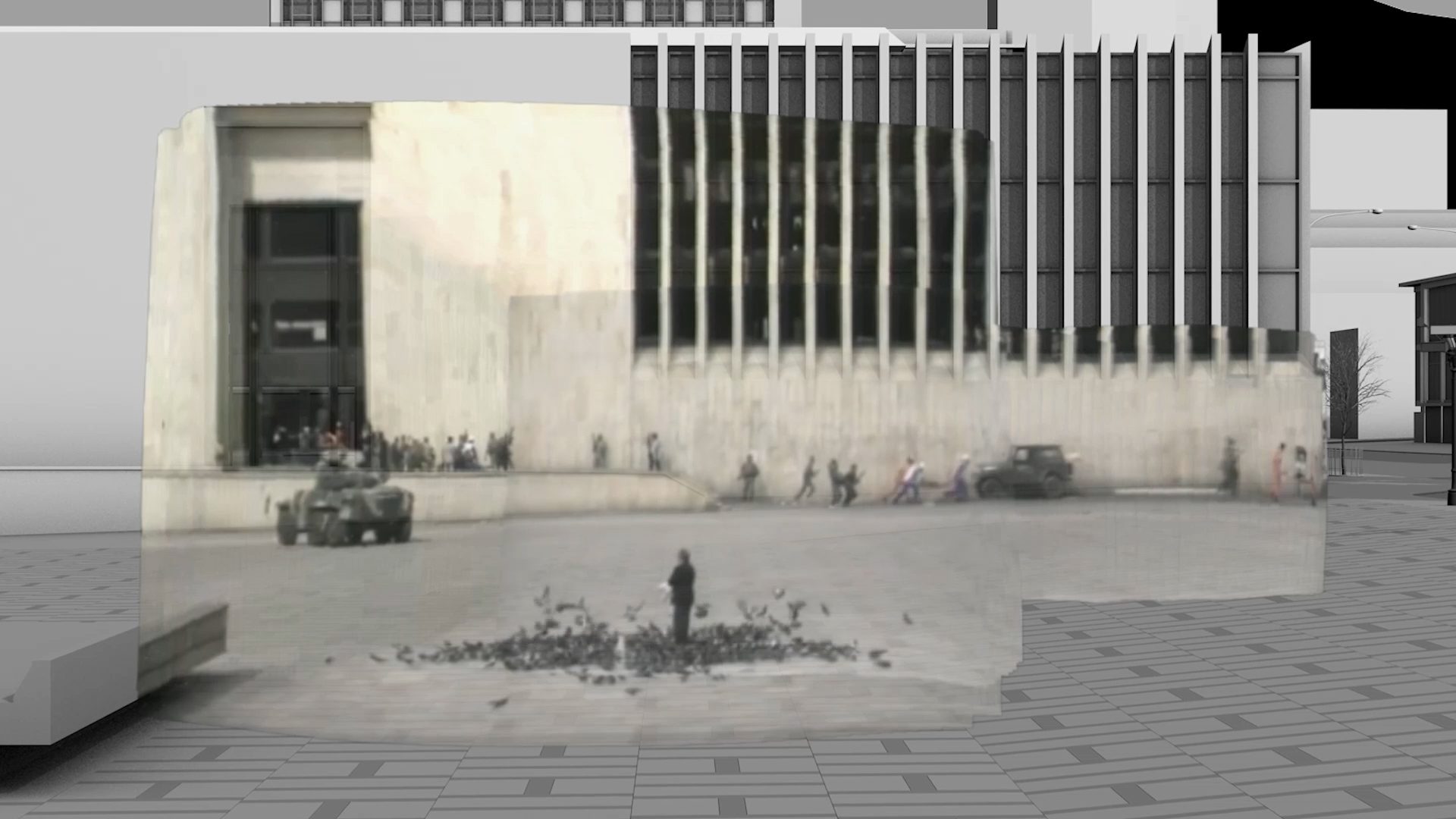
Cajas Negras – Image 3 - A stabilised video showing the disappeared exiting the Palacio de Justicia / Video estabilizado que muestra a los desaparecidos saliendo del Palacio de Justicia, Cajas Negras (2021), Forensic Architecture
A stabilised video showing the disappeared exiting the Palacio de Justicia / Video estabilizado que muestra a los desaparecidos saliendo del Palacio de Justicia, Cajas Negras (2021), Forensic Architecture

The investigation challenges claims by the Colombian military that people who disappeared after the siege were killed in firefights during the security forces’ assault on the building. It builds on and supports the work of relatives, victims’ organisations, human rights groups, and lawyers to show how what was posited as a chaotic hostage rescue by the military forces was in fact a coordinated act of state repression. This supposed chaos served as the state’s cover story for decades, masking the responsibilities of the military for the disappearances.

Play Video

FA analysed fifty hours of press footage of the event—including some never seen before—and hundreds of testimonies, some of which we collected ourselves. Other sources include the archives of the Colombian Attorney General and of the Inter-American Court of Human Rights. Testimonies, videos, and audio recordings came together in a digital reconstruction of three key sites where the crime of enforced disappearance unfolded: the Plaza de Bolivar, the Casa del Florero, and the Canton Norte. Our analysis of the footage of the siege reveals the logistics of the military operating as people exited the building. Our analysis also identifies possible undercover agents collaborating with the intelligence and security forces, as well as the use of ambulances and medics during the operation.

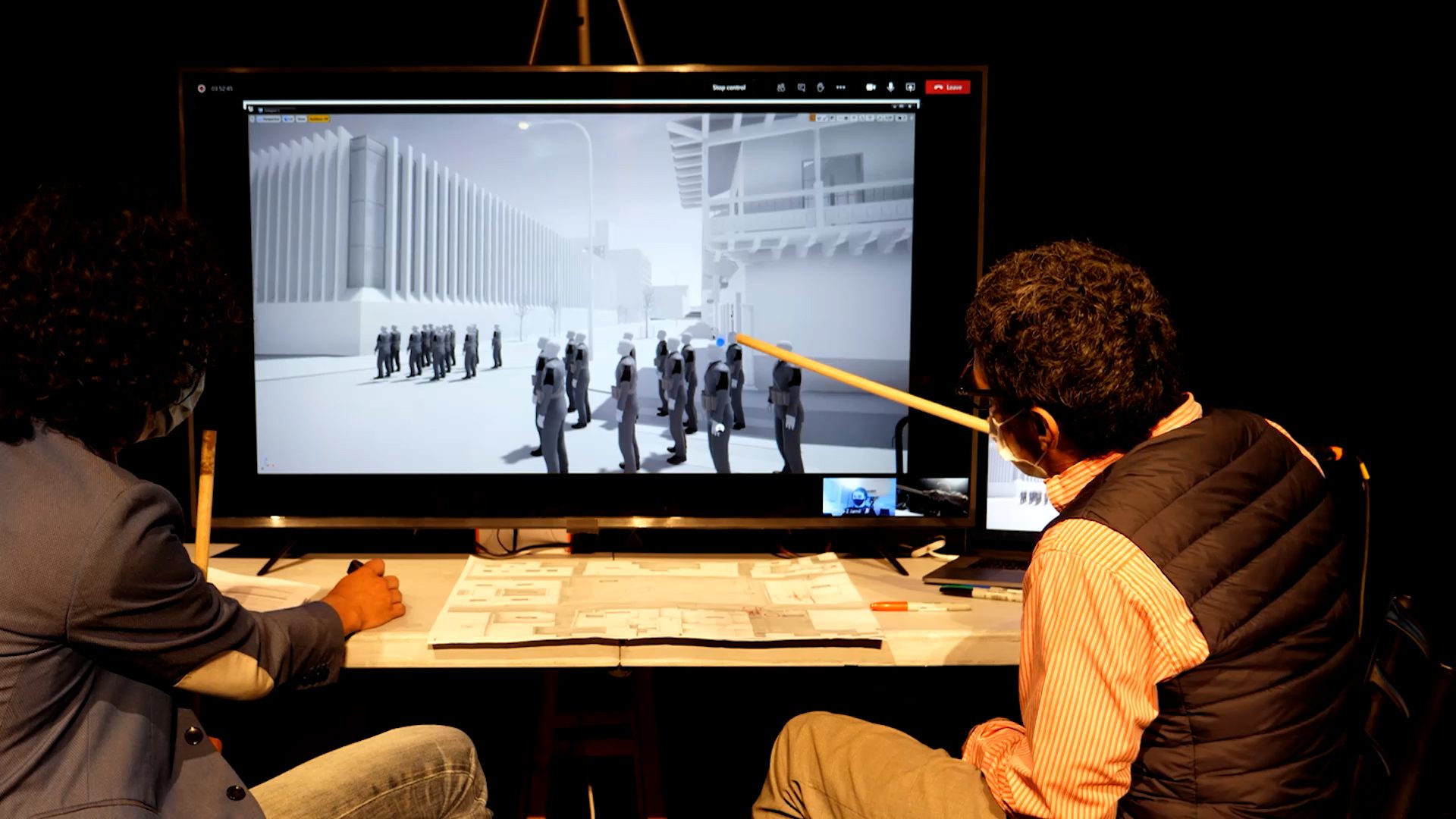
Cajas Negras – Image 6 - Situated testimony with Ignacio Gomez / Testimonio situado con Ignacio Gómez, Cajas Negras (2021), Forensic Architecture
Situated testimony with Ignacio Gomez / Testimonio situado con Ignacio Gómez, Cajas Negras (2021), Forensic Architecture

The investigation maps for the first time the interconnected use of military facilities across Bogotá and their role in the disappearances, making the logistics of enforced disappearance legible as we follow victims between multiple sites and military installations around Bogotá.

Play Video

Using testimonies, we were able to show how the security forces turned a nearby colonial-era museum of the Casa del Florero into an interrogation centre. We then followed the paths of the detainees to the military base of the Cantón Norte, located in the north of Bogotá, where the counterinsurgency operation was headquartered. There, we identified where detainees were interrogated and tortured.

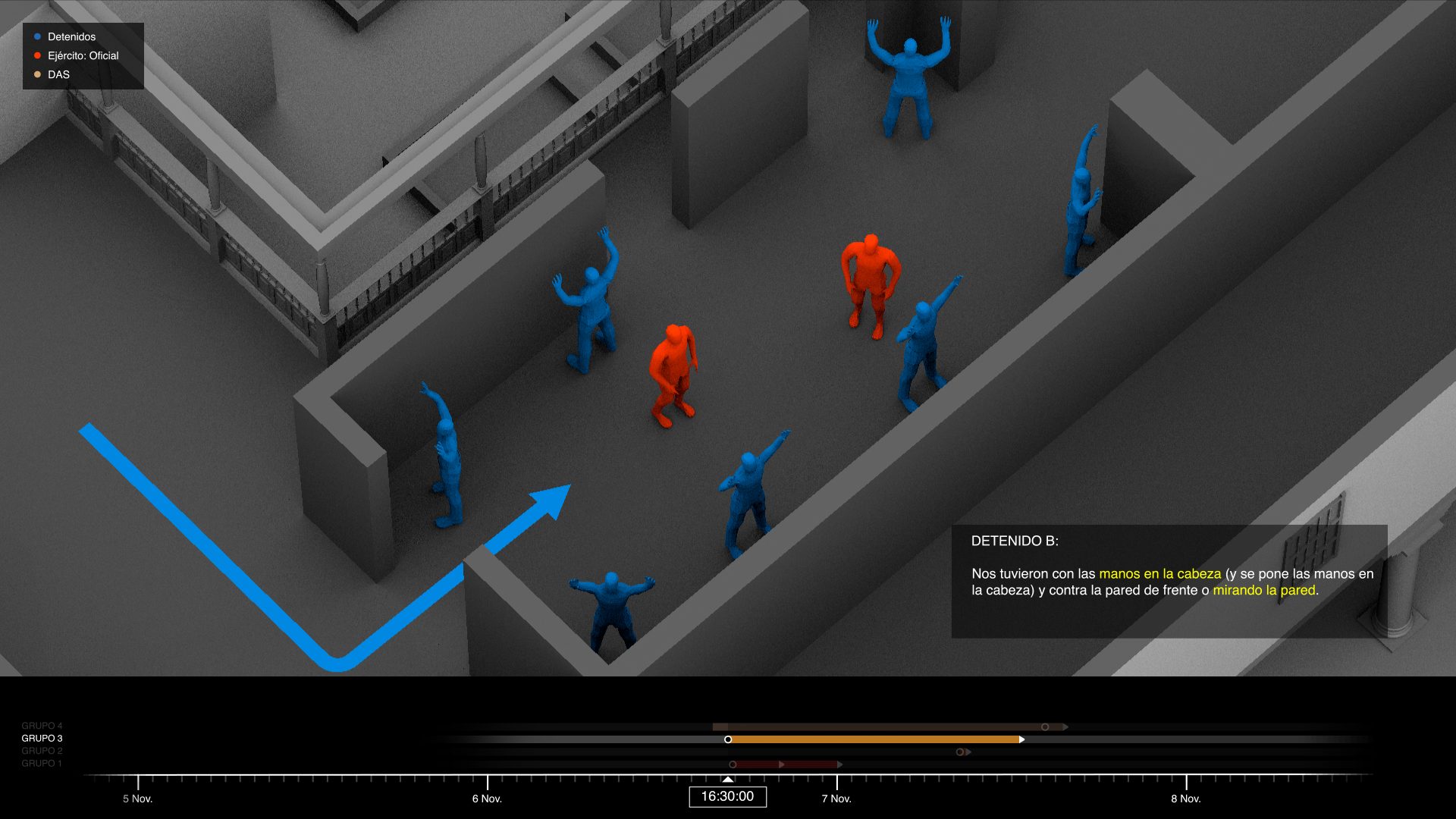
Casa del Florero – Image 1 - The organisation and choreography of the Casa del Florero as a black box, built from testimonies of detainees / Organización y coreografía de la Casa del Florero como caja negra, reconstruida a través de testimonios de detenidos, Casa del Florero (2021), Forensic Architecture
The organisation and choreography of the Casa del Florero as a black box, built from testimonies of detainees / Organización y coreografía de la Casa del Florero como caja negra, reconstruida a través de testimonios de detenidos, Casa del Florero (2021), Forensic Architecture

The crime of enforced disappearance involves both violence against people and the long-term suppression of the evidence that would establish what happened to them. Creating a detailed timeline of events following the siege, we show how different types of evidence—videographic, testimonial, documentary and medical—was suppressed for the last 36 years, demonstrating how the perpetrators concealed the crimes of enforced disappearance.

Forensic Architecture Team
Principal Investigator
Researcher in Charge
Project Coordinators
Research
Editing
Modelling
Design
Narration, Editing, and Research
Project Support
Comisión de la Verdad
Comisiando
Researcher in Charge
Coordination
Research
Legal Advisor
Extended Team
Animation
Mural design
Sound Design
Additional camera work in La Escuela de Caballería
Research support and assistance
With the participation of
Collaborators
Colectivo de Abogados José Alvear Restrepo
Dh Colombia
Programar Televisión S.A.
Fundación Patrimonio Fílmico Colombiano
Exhibitions
10 – 30 Jul 2026
Points of View: From the Genoa G8 to Contemporary Forensic Practices
MAIIIM – Centro per le Arti del Terzo Millennio
14 Dec 2023 – 28 Jun 2024
Traces of Disappearance (Huellas de Desaparición) at Museo La Tertulia
Museo La Tertulia, Cali
12 Aug – 22 Oct 2023
Atmósferas de Terror
Centro Nacional de Arte Contemporáneo
15 Sep 2022 – 02 Jan 2023
Traces of Disappearance (Huellas de Desaparición) at Museo de Antioquia
Museo de Antioquia, Medellín, Colombia
10 Dec 2021 – 18 Jul 2022
Traces of Disappearance (Huellas de Desaparición) at MAMU
Museo de Arte Miguel Urrutia (MAMU), Bogotá
Events
24 Nov 2023
Latino Docs 15th Edition
Latino Docs, Le Cratère, Toulouse, France
Press
27 Jun 2024
NACLA
Tracking Absence Through Presence at Colombia’s Palace of Justice
22 Jan 2023
El Espectador
Familiares de desaparecidos del Palacio piden extender “Huellas de Desaparición”
23 Sep 2022
El Colombiano
En Medellín, el arte da su perspectiva sobre las problemáticas sociales
17 Sep 2022
El Colombiano
Imagen, columna de Julián Posada
16 Jun 2022
Colombia +20
“Ganadería genera 60 veces más deforestación que el área por coca en la Amazonía”
11 May 2022
90 Minutos
Huellas de desaparición: un camino hacia la verdad en Colombia
30 Apr 2022
La Nación
Crece la dignidad
13 Apr 2022
infobae
‘Huellas de desaparición’, la exposición que revive hechos como el despojo de tierras y la toma del Palacio de Justicia
12 Apr 2022
Radio Nacional de Colombia
'Huellas de desaparición', una exposición para recorrer el camino de la verdad
08 Apr 2022
Cambio
Huellas de desaparición y el arte de la data
27 Feb 2022
Cambio
El episodio del Palacio no terminó el 7 de noviembre de 1985: Hannah Meszaros Martin
22 Feb 2022
Colombia Calling with Richard McColl
Colombia Calling Ep. 413 | What is Forensic Architecture?
14 Feb 2022
ABC
La tecnología nunca descansa para combatir un crimen cada vez más sofisticado
28 Jan 2022
El Espectador
“Huellas de desaparición”
05 Jan 2022
El Espectador
Las huellas de la desaparición en realidad virtual
31 Dec 2021
El Pais
Tecnologías de alto impacto y arte para reconstruir los horrores de la violencia en Colombia
16 Dec 2021
Radionica
La Comisión de la Verdad presenta la exposición “Huellas de Desaparición”
15 Dec 2021
Cerosetenta
“Huellas de desaparición”: el sentido estético para mostrar crímenes de Estado
14 Dec 2021
El Espectador
Avances de la Comisión de la Verdad, la nueva exhibición del MAMU
13 Dec 2021
infobae
Las revelaciones que arrojó la reconstrucción forense de la retoma del Palacio de Justicia, más de 30 años después
11 Dec 2021
El Colombiano
Masacres en Antioquia y toma del Palacio de Justicia son reconstruidas en 3D
11 Dec 2021
El Espectador
Palacio de Justicia: los videos de los nuevos hallazgos de la investigación
09 Dec 2021
Washington Post
Opinión: Colombia se sitúa en la vanguardia de la memoria histórica
09 Dec 2021
HJCK
"Huellas de desaparición", una exposición sobre la verdad y la memoria
Related Investigations
Dispossession and The Memory of the Earth: Land Dispossession in Nueva Colonia
Nueva Colonia, Urabá Antioqueño, Colombia · 1960s to the present day
The Enforced Disappearance of the Ayotzinapa Students
Iguala, Mexico · 26 Sep 2014 – 27 Sep 2014
The Murder of Lucas Villa
Pereira, Colombia · 05 May 2021
The Killing of Dilan Cruz
Bogotá, Colombia · 01 Nov 2019
The Forest Under Detection
Department of Guaviare, Colombia · 1492 – Ongoing