

- Date of Incident
- 02 Mar 2020
- Location
- Evros/Meriç river delta
- Publication Date
- 03 Jul 2020
- In Partnership With
- Self-Initiated
- Additional Funding
- Open Society Foundations (OSF)
- Collaborators
- HumanRights360
- Methodologies
- 3D Modelling, Geolocation, Audio Analysis, Synchronisation, Fieldwork, Remote Sensing, OSI
- Forums
- Legal Process, Media, Parliamentary Inquiry
- Exhibitions
- This World is White No Longer: Views of a Decentered World, Forensic Architecture: Practices of Verification
Following the EU-Turkey agreement of March 2016, Turkey had contained inside its territory refugees and migrants trying to reach Greece and the EU. However, on 27 February 2020, the Turkish government encouraged and mobilized thousands of migrants and refugees to cross into Greece at the Evros/Meriç region in order to exert political pressure on the EU to comply with Turkish interest in Syria.
The Greek government responded by deploying its police and military to the region. It warned migrants not to cross, and suspended its asylum system.
On 2 March, after several days of tension, violence escalated at the border. Reports emerged of shootings, and a casualty near the river delta. The victim was identified as Muhammad al Arab, a young man from Aleppo, Syria. The Greek authorities denounced these claims as fake news. There is still no commonly accepted account of what happened that day.
On the following day, 3 March, a committee of EU officials, including the Greek Prime Minister, Kyriakos Mitsotakis, and the European commission president, Ursula von der Leyen, visited the region. They gave a joint statement, where der Leyen praised Greece as the ‘shield’ of Europe. The day after that, 4 March, Muhammad Gulzar was also shot dead in the Evros/Meriç border.
On 5 March, we released a preliminary investigation into the killing of Muhammad al-Arab, corroborating the time and location of the incident.
In the following months, we collected and examined more videos and images, and spoke to eyewitnesses in order to reconstruct the events of that day with precision. We collected documents and consulted forensic experts who performed acoustic analysis on gunshots captured in one of the videos.
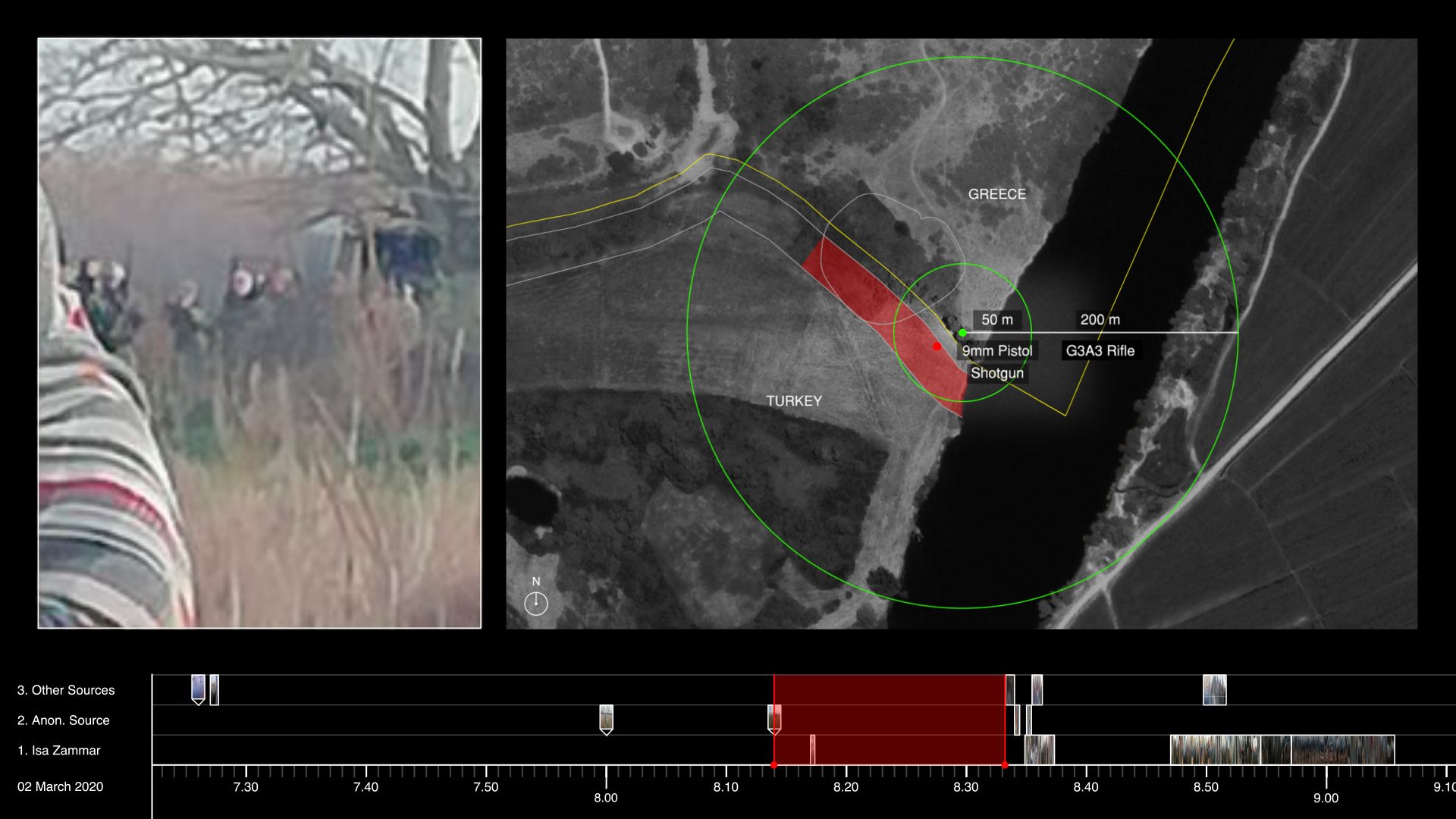
We established that rounds were fired along that stretch of the border on that day and Muhammad al-Arab was killed in Turkish soil within 15-135m from a group of armed Greek soldiers standing right on the border. Our analysis supports the testimony of several witnesses who claim that al-Arab was shot by this group of Greek soldiers.
Lawyers representing the family of Muhammad al Arab have requested that Greece launch an investigation to establish who was responsible for his killing. All evidence we have gathered will be made available to investigating authorities.
Methodology
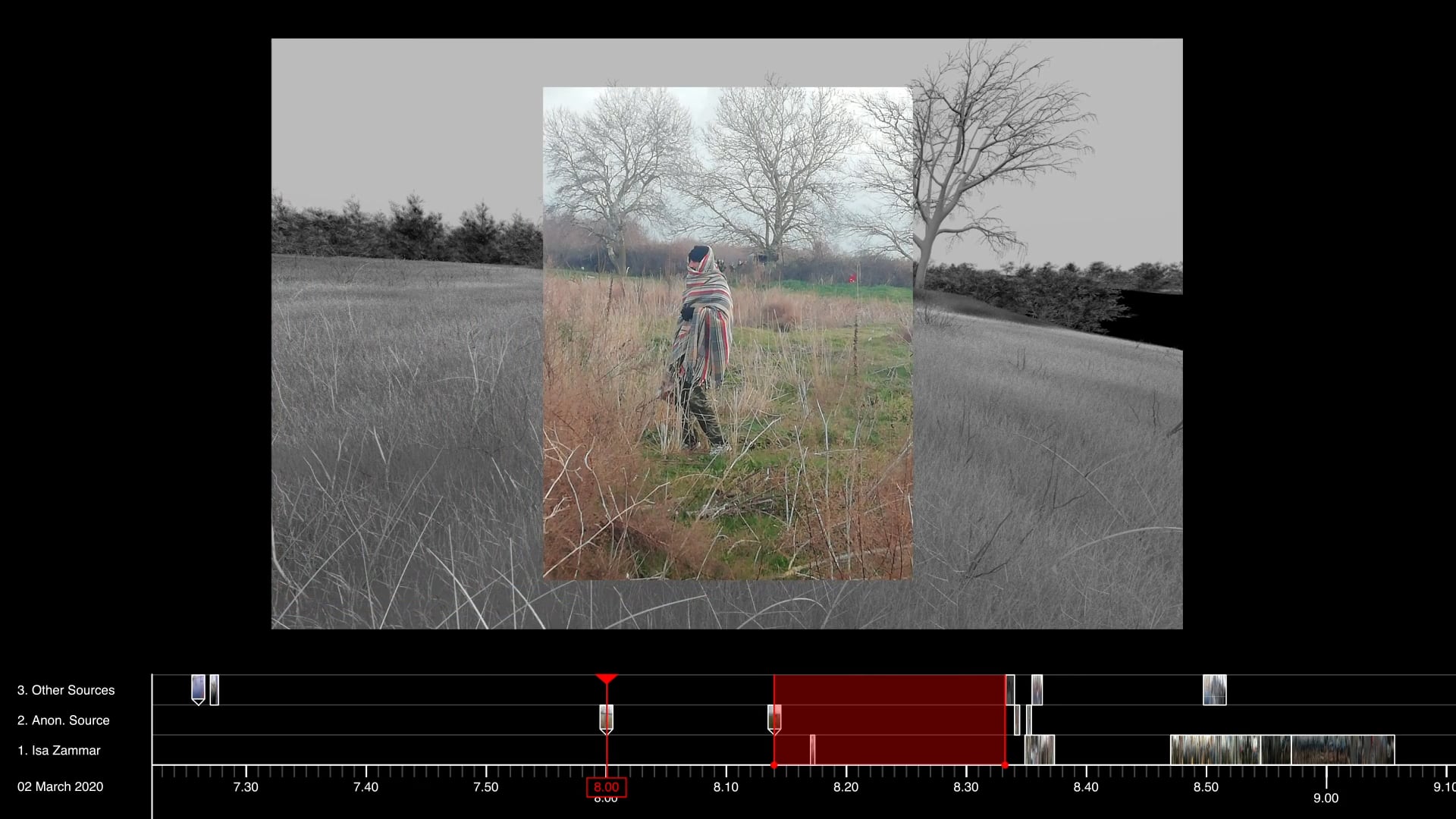
Through OSINT analysis we collected various videos capturing different perspectives of the March 2nd event.
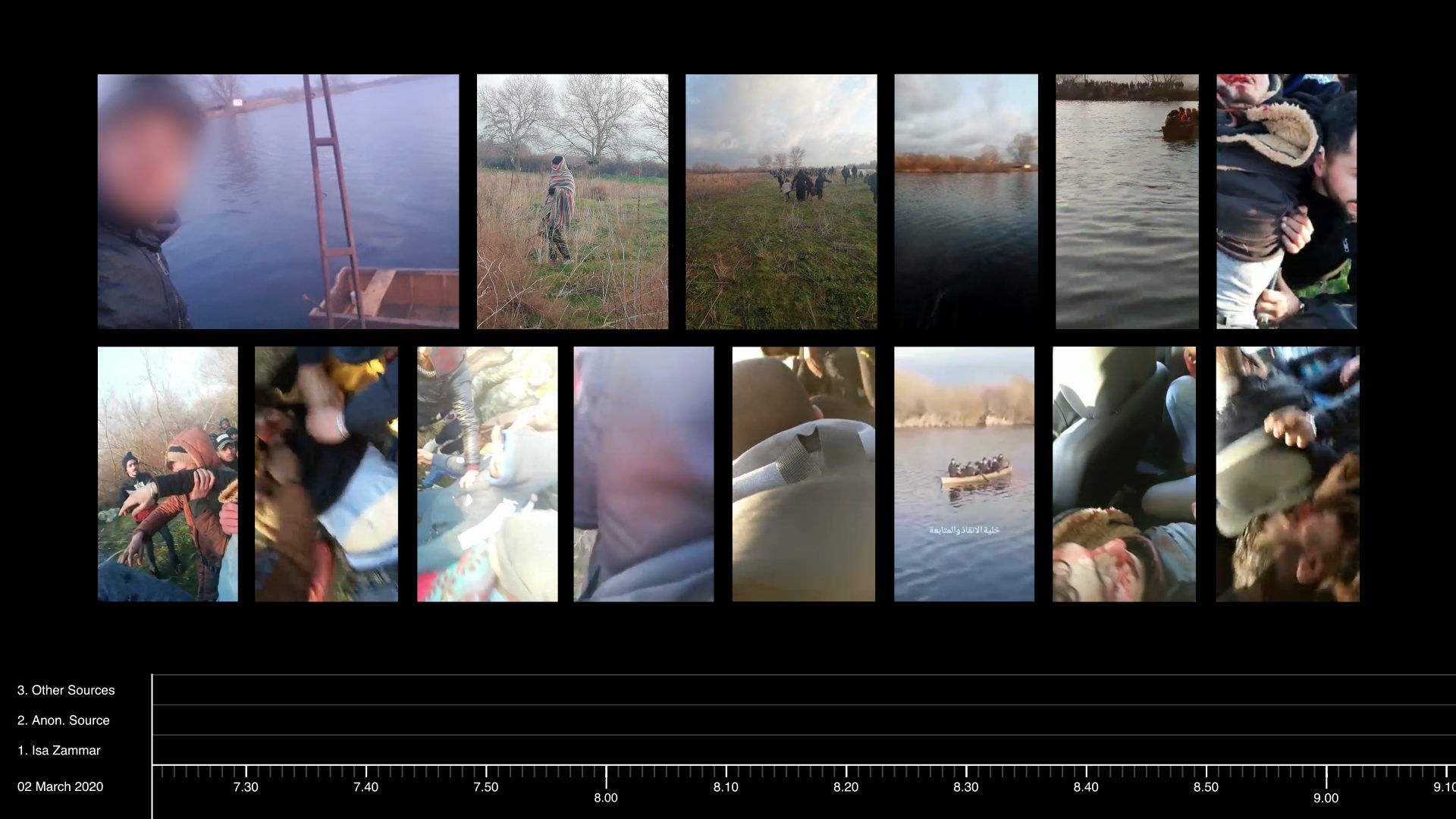
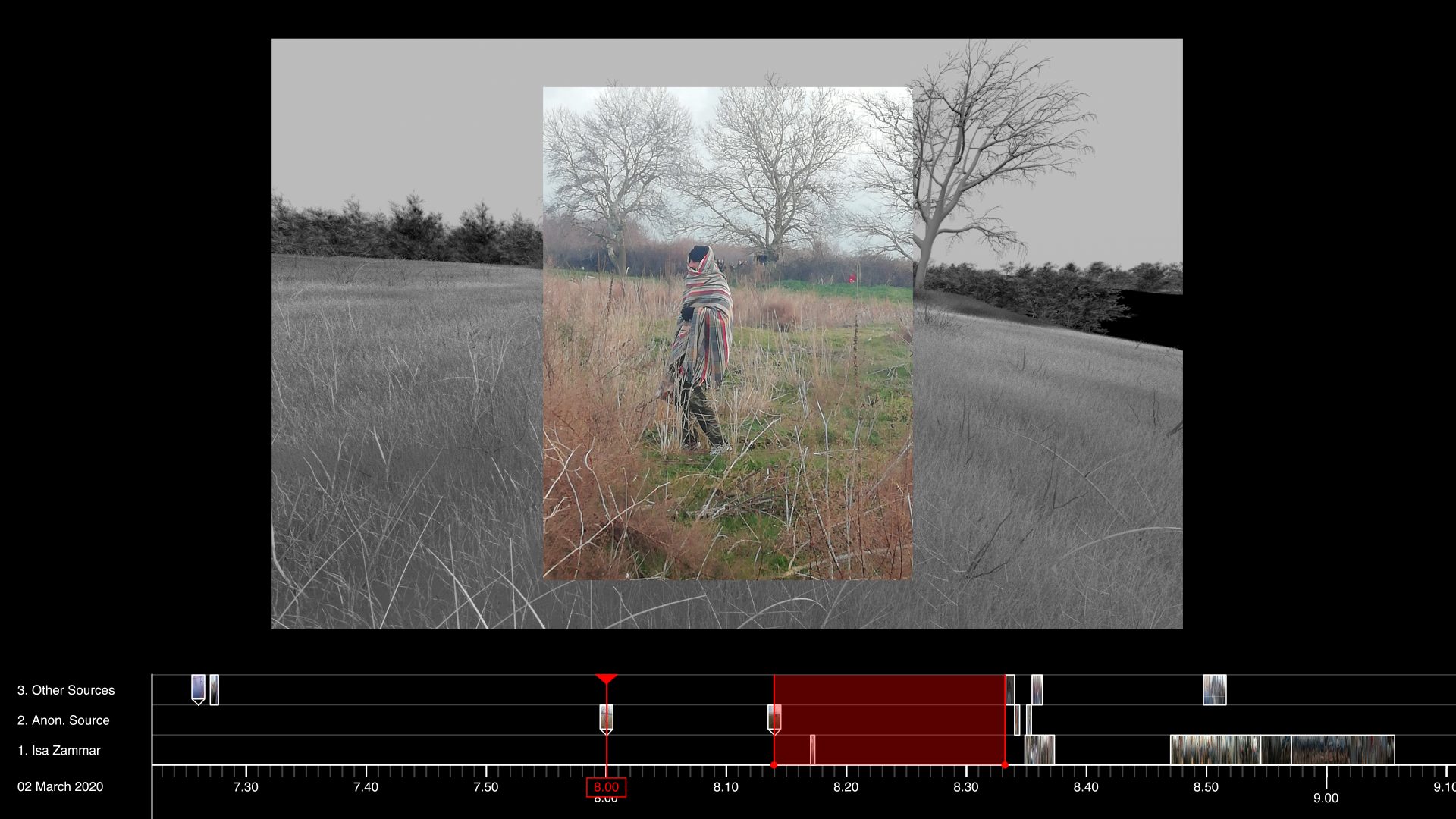
We geolocated the material following distinguishable features and vegetation in the background.
By cross-referencing this material against witness testimony, we were able to approximate the area where Muhammad al-Arab was shot, and trace his trajectory after he was wounded.
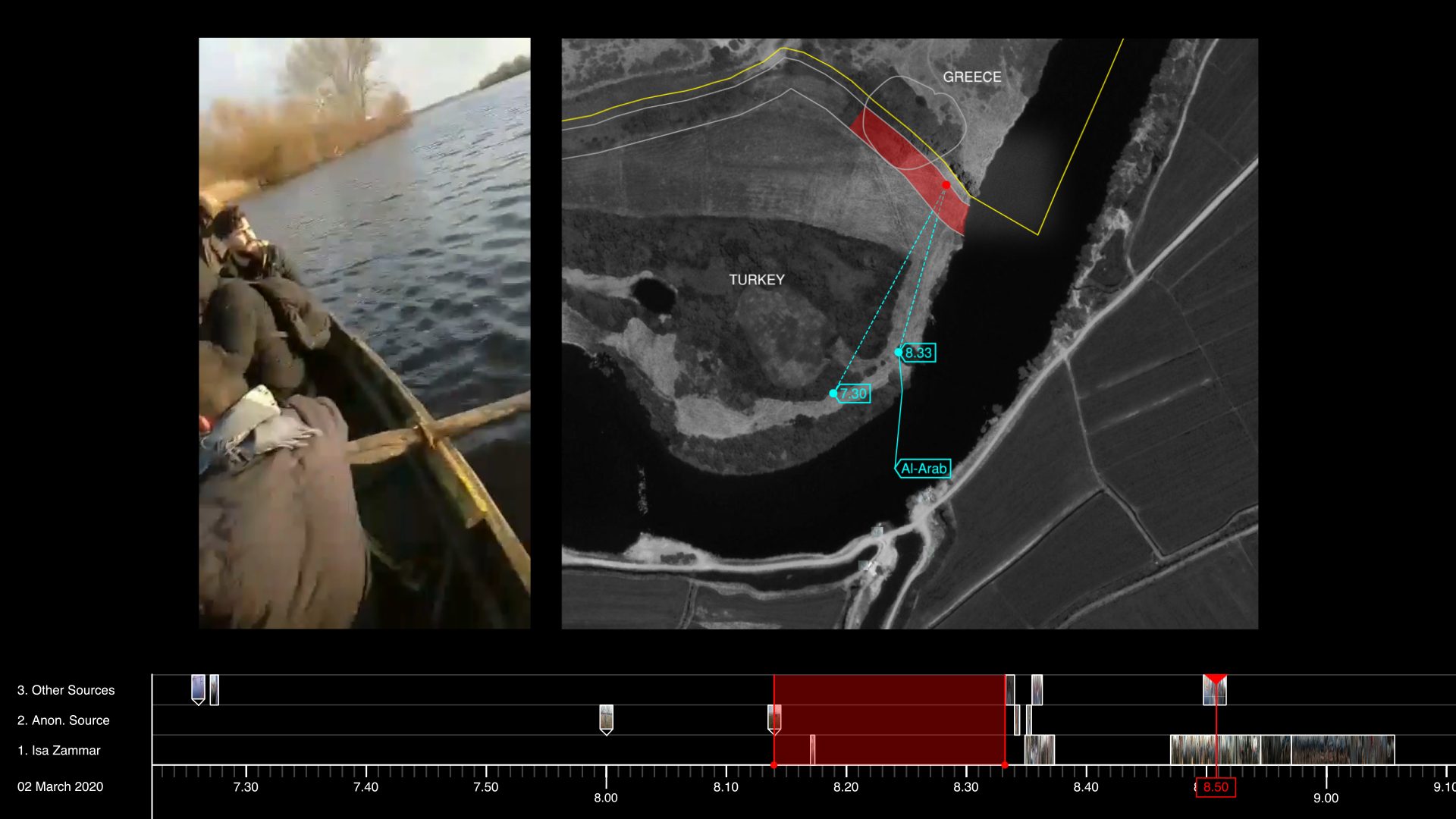
The incident took place in a rare Turkish parcel of land in the western, banks of the river. This was the result of shifts in the river course since the border was demarcated along the median line of the river in 1926. The border drawn on Google Earth for that location was imprecise. In order to position the different actors with accuracy, we redrew the border to follow the median line between the old banks of the river.
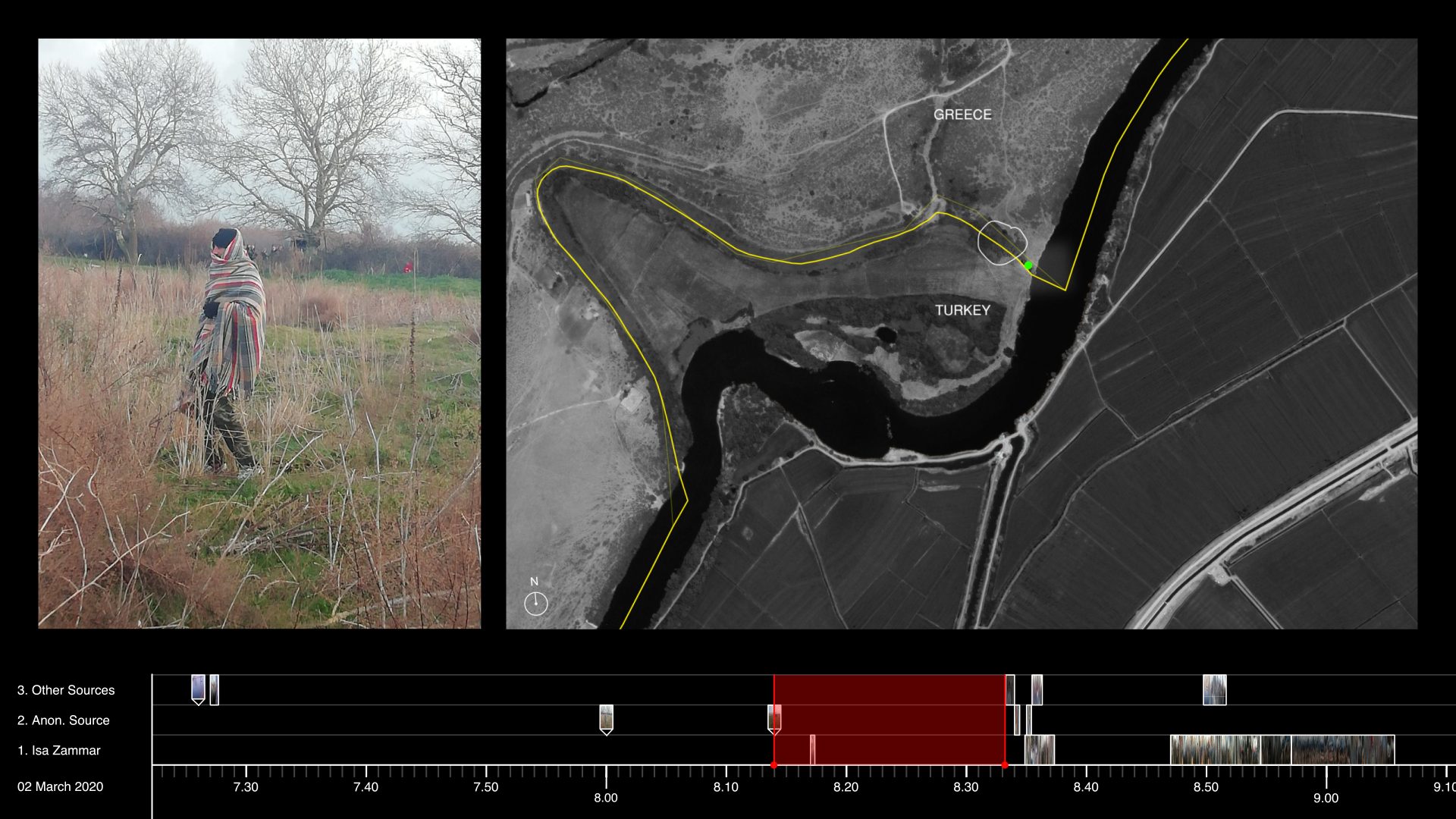
We found that al-Arab was shot on Turkish soil, within 15-135m from a group of armed Greek soldiers standing right on the border, and well within range of their rifles.
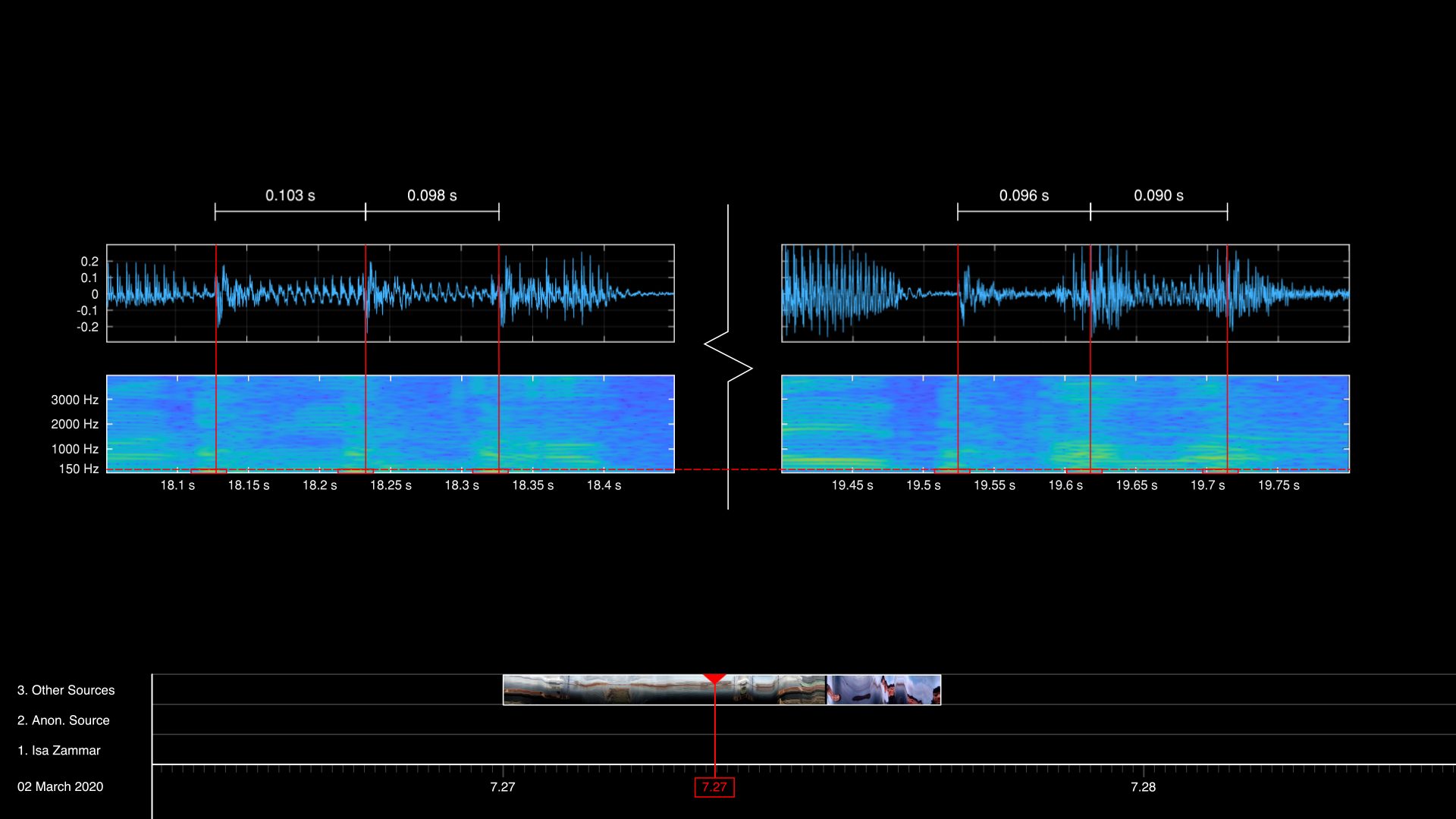
Together with an expert at Beck Audio Forensics, we performed acoustic analysis on shots heard coming from the same location, earlier that morning. The expert determined the rounds were fired from an automatic rifle, therefore excluding civilian actors. We determined that the shots came from the location of the soldiers.
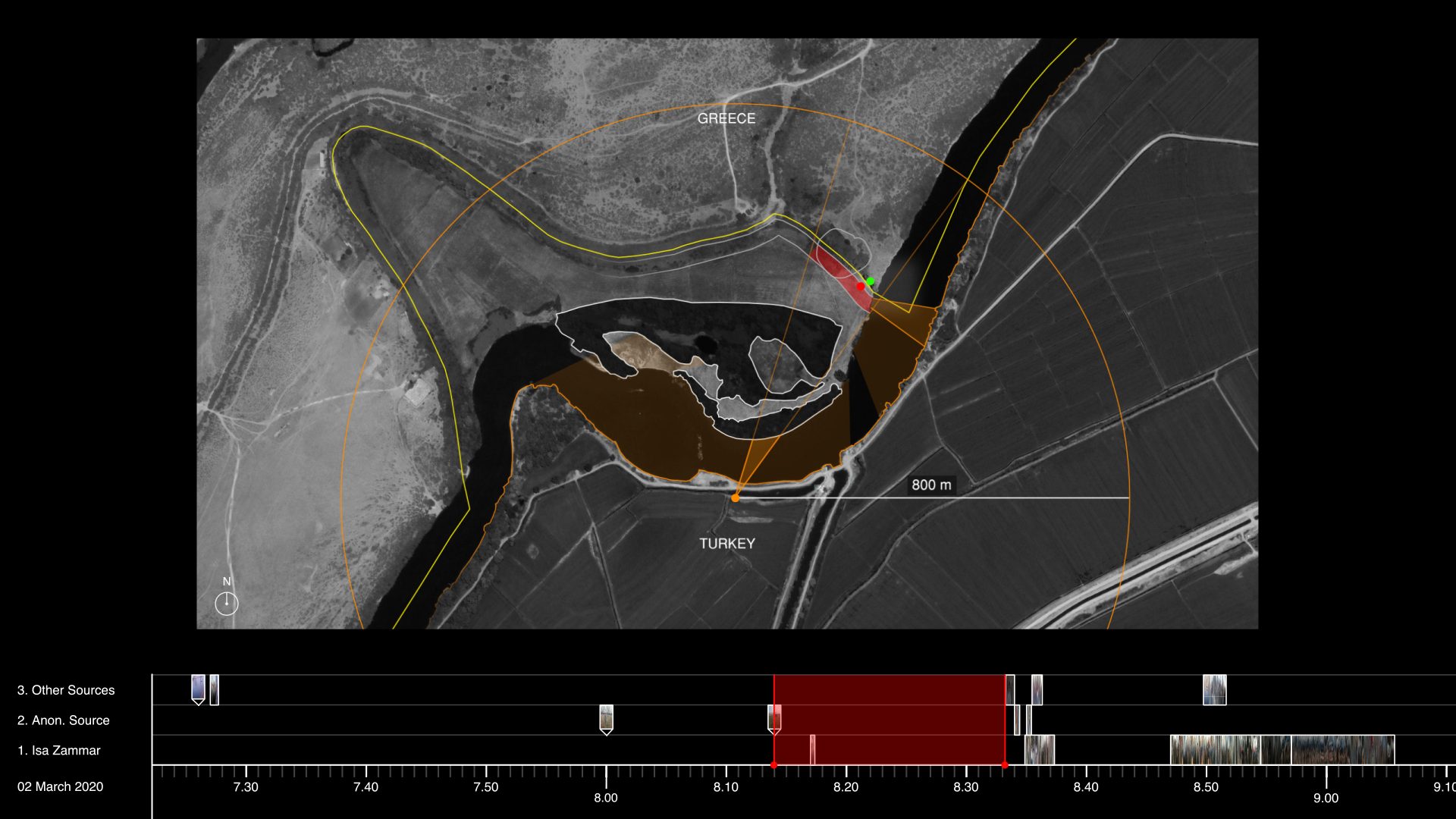
Through satellite analysis, we found that vegetation obstructed a clear shot from the Eastern banks of the river. We also did not find any Turkish uniformed or armed men on the Western banks of the river, where al-Arab, was shot in any of the videos or images we gathered.
We obtained a translation of the preliminary autopsy, conducted in the hospital of Ipsala. It mentions four separate wounds: One in the right anterior shin bone, one in the left eyebrow, one in the nasal bone, all three possibly caused from plastic bullets, as well as an entry wound below the right shoulder blade caused by live ammunition.
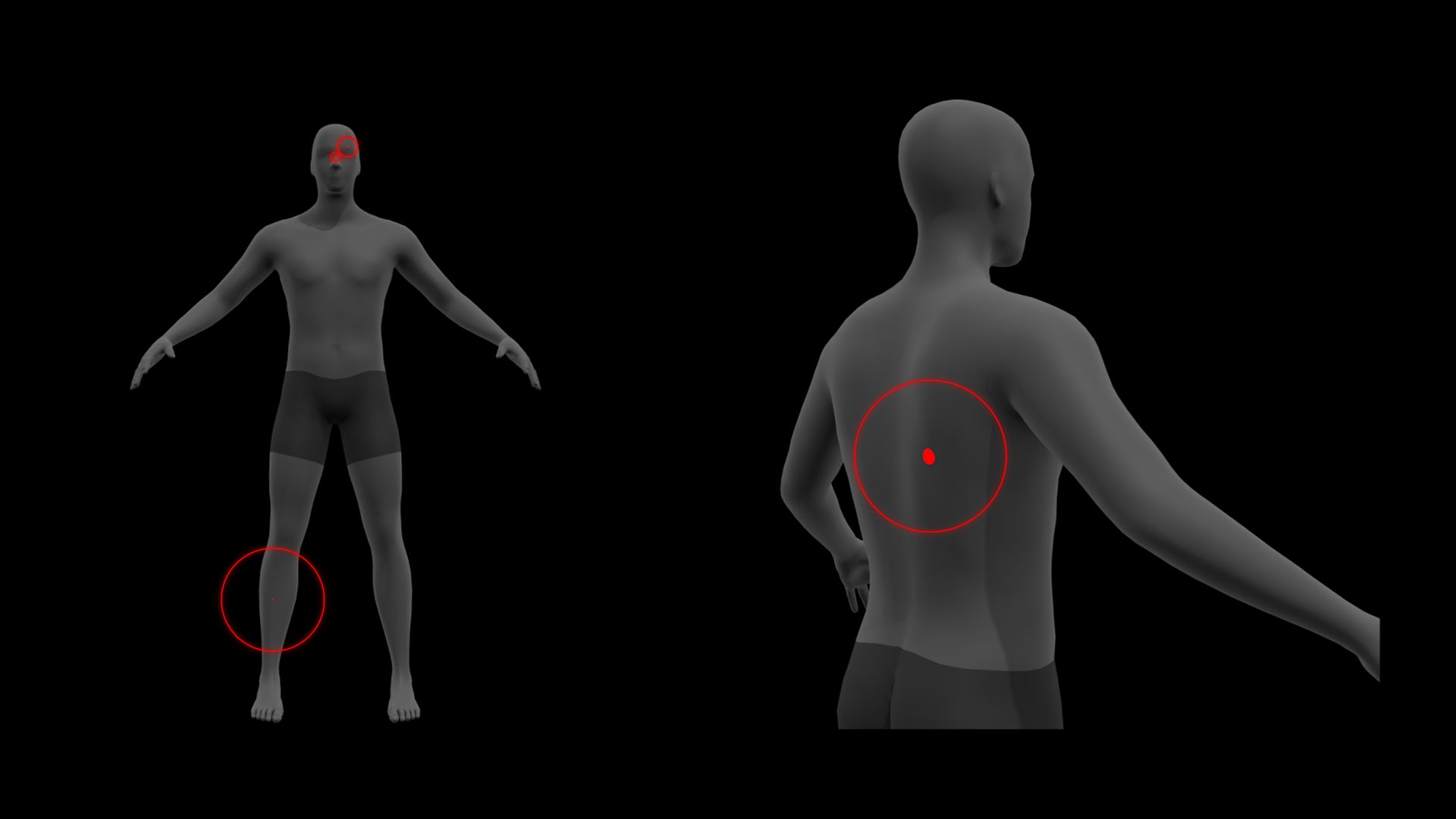
Through our analysis, the possibility that al-Arab was wounded and killed by four Turkish bullets coming from the opposite banks of the river, three of which plastic, is evaluated as highly unlikely.